
A living room without a TV sounds strange to many people.
Almost uncomfortable.
For years, the television has been the center of the room.
The anchor.
The thing every sofa points toward.
But not every living room needs one.
In fact, removing the TV often changes everything.
The mood softens.
The room breathes.
Conversation returns.
A TV-free living room is not about rejecting technology.
It’s about intention.
It’s about choosing how you want to live in the space.
How you want to relax.
How you want to connect.

Living Rooms Without a TV
1. The Conversation-Focused Living Room
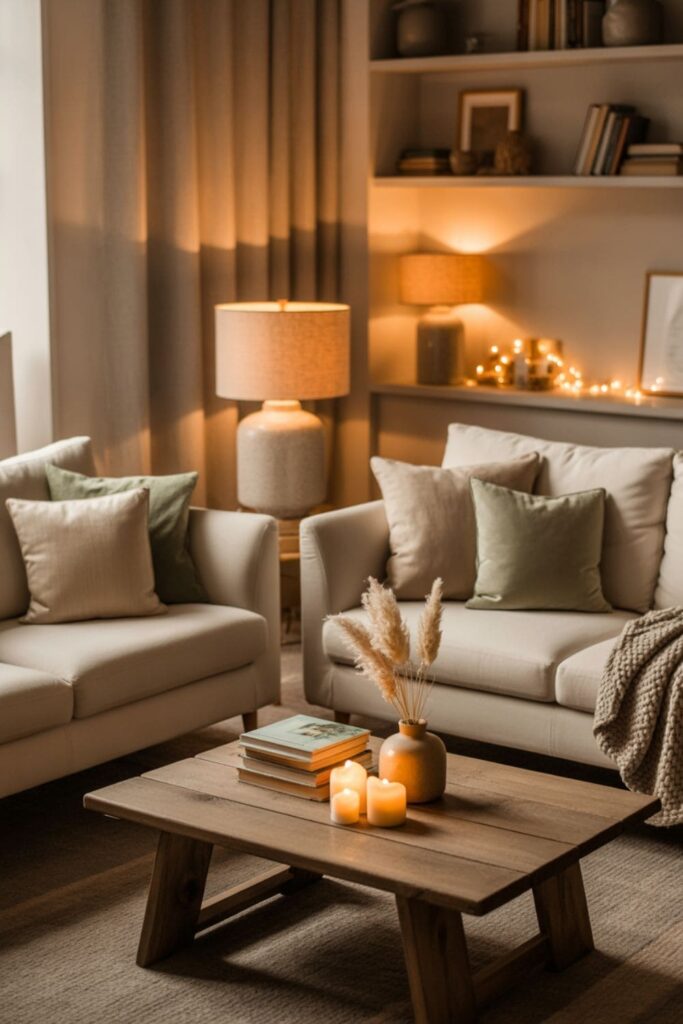
This is the most classic TV-free setup.
Sofas face each other.
Chairs are angled inward.
The layout invites people to talk.
A coffee table sits at the center.
Books, candles, or flowers rest on top.
Nothing competes for attention.
You sit.
You speak.
You listen.
This kind of room feels warm.
Intentional.
Almost timeless.
2. The Reading Retreat
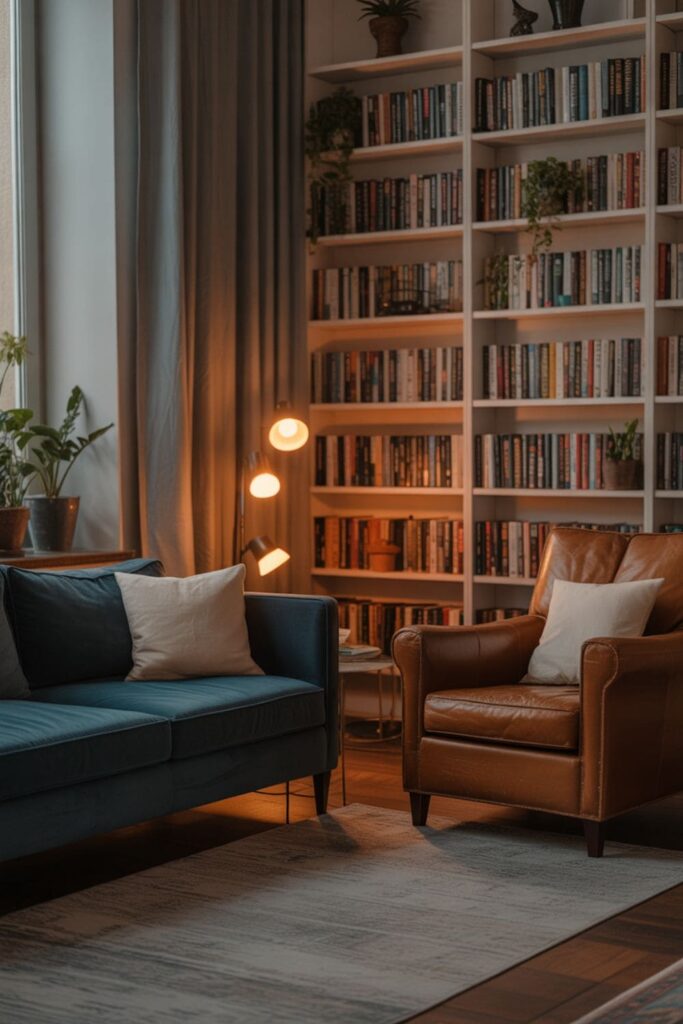
Some living rooms are made for silence.
Or near silence.
A deep sofa.
A comfortable armchair.
A floor lamp with soft light.
Bookshelves line the walls.
Not decorative ones.
Real books. Worn spines. Dog-eared pages.
This room doesn’t entertain you.
It welcomes you.
You come here to slow down.
To read.
To disappear for a while.
3. The Fireplace-First Living Room
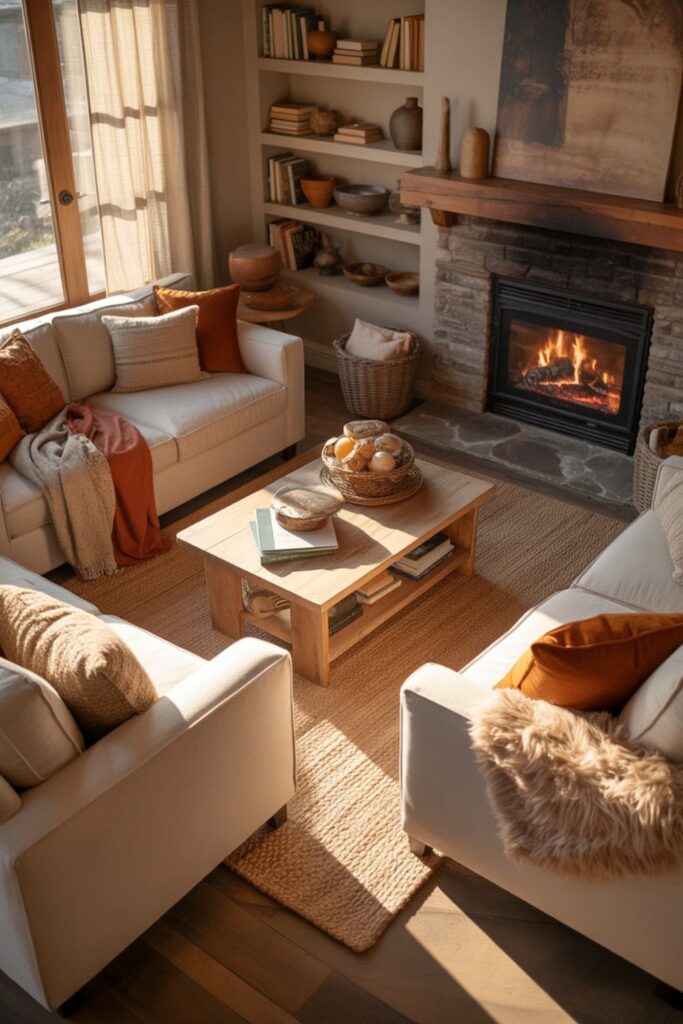
When there’s no TV, the fireplace shines.
Literally.
It becomes the focal point.
The emotional center of the room.
Furniture gathers around it.
Not perfectly symmetrical.
Just comfortable.
In colder months, this room feels grounding.
In warmer months, it still feels balanced.
The fireplace doesn’t demand attention.
It earns it.
4. The Art-Centered Space
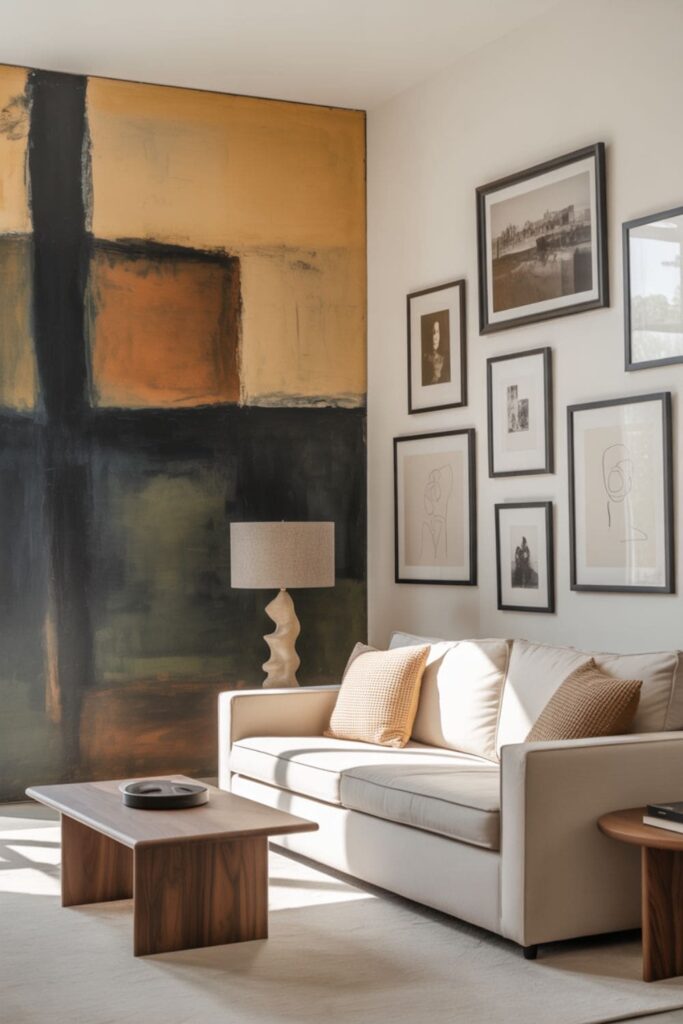
Without a TV, walls open up.
And art takes over.
A large painting.
A gallery wall.
Even a single sculptural piece.
The living room becomes expressive.
Personal.
Almost like a small gallery.
You notice details.
Brush strokes.
Textures.
The room tells a story.
Not through sound.
But through sight.
5. The Minimalist Living Room
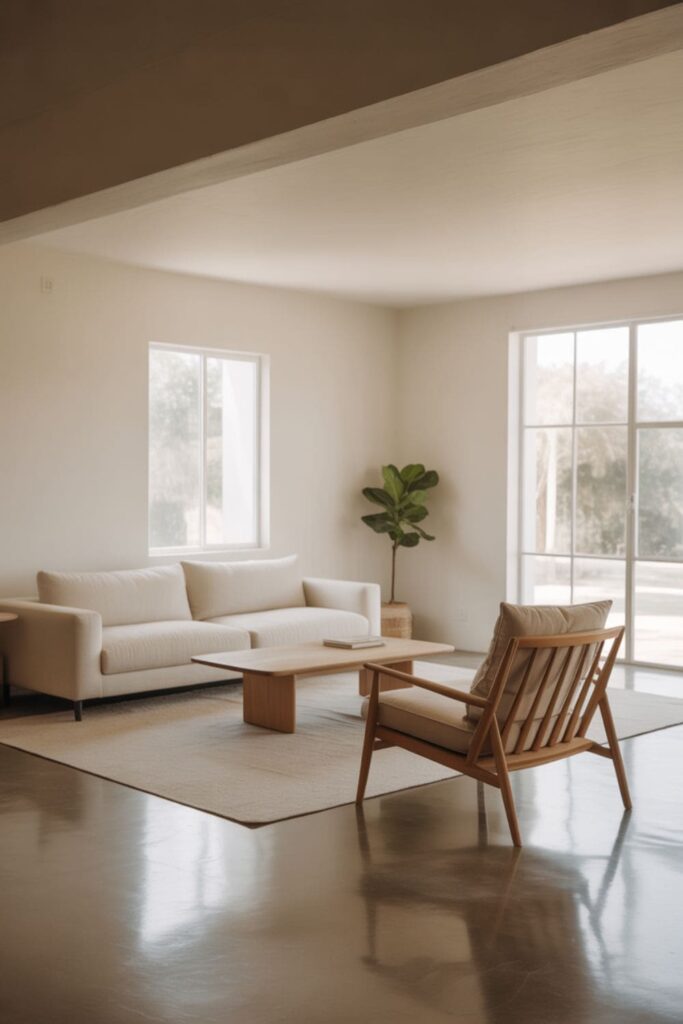
Minimalism and TV-free living rooms go hand in hand.
Fewer items.
Cleaner lines.
More space.
A low sofa.
One chair.
One table.
Nothing extra.
This kind of room feels calm.
Controlled.
Clear.
It’s not empty.
It’s intentional.
6. The Music-Lover’s Living Room
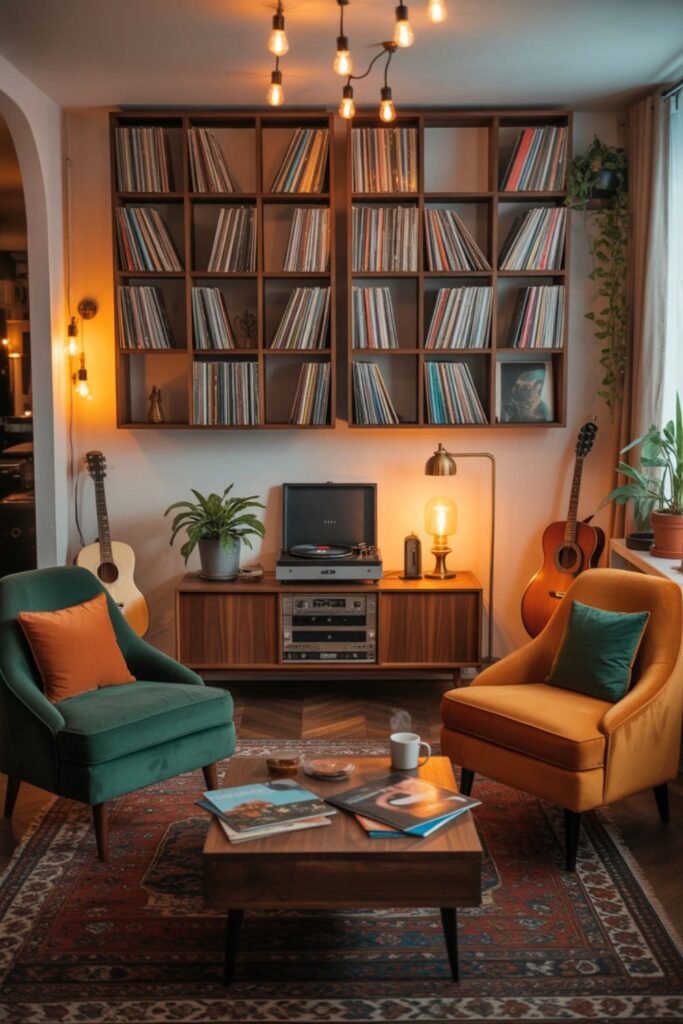
No TV doesn’t mean no sound.
For some people, music takes center stage.
A record player.
A small speaker system.
A shelf of vinyl.
Seating is relaxed.
Comfortable.
Not rigid.
This room is about atmosphere.
Mood.
Rhythm.
You don’t watch.
You listen.
7. The Window-Focused Living Room
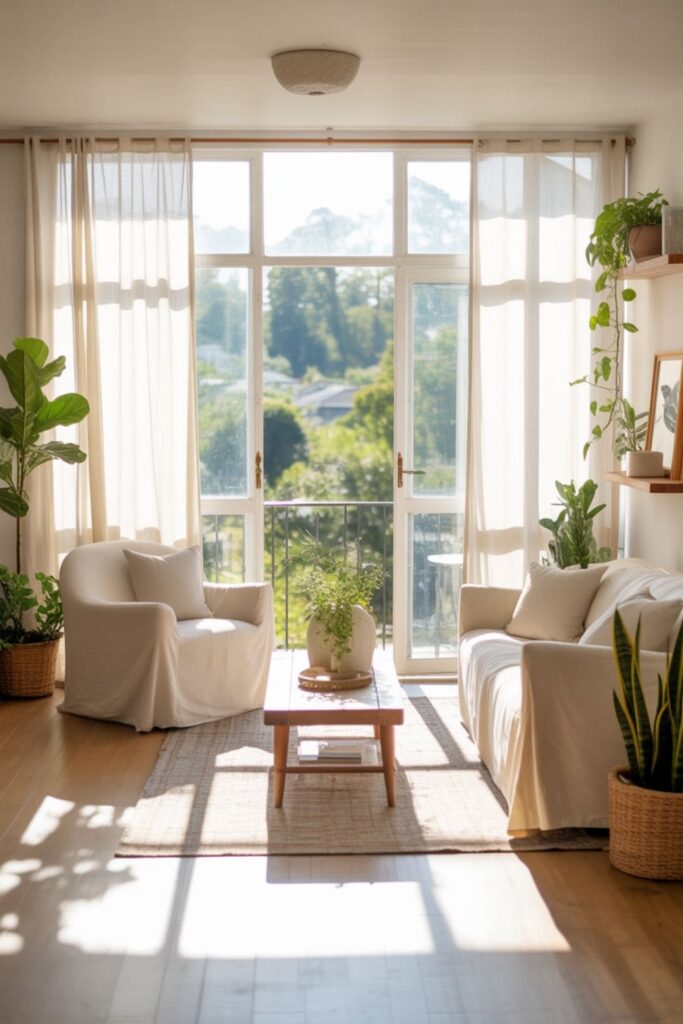
When the TV disappears, windows matter more.
Natural light becomes the feature.
Furniture faces outward.
Toward the view.
Toward the outdoors.
Sheer curtains soften the light.
Plants add life.
This room feels open.
Airy.
Alive.
It connects inside to outside.
Without a screen in between.
8. The Floor Seating Living Room
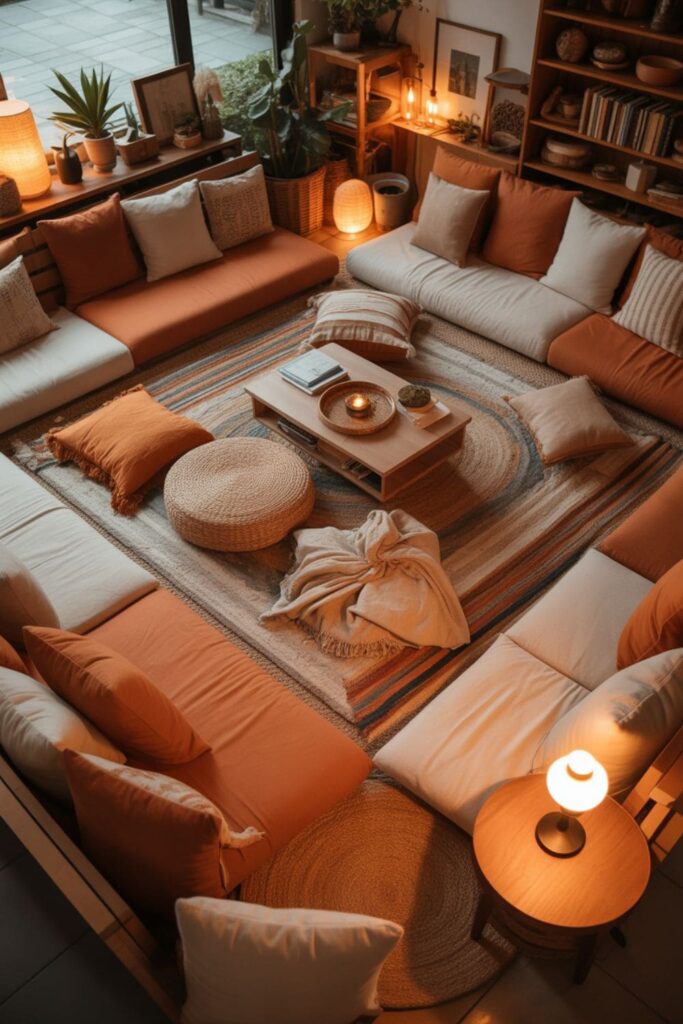
Some cultures have done this forever.
Low seating.
Floor cushions.
Soft rugs.
Without a TV, the room feels informal.
Relaxed.
Human.
People sit where they feel comfortable.
They move around.
They stay longer.
This kind of living room feels communal.
Shared.
Warm.
Related: 17+ Living Room Ideas With Fireplace & TV
9. The Game and Puzzle Room
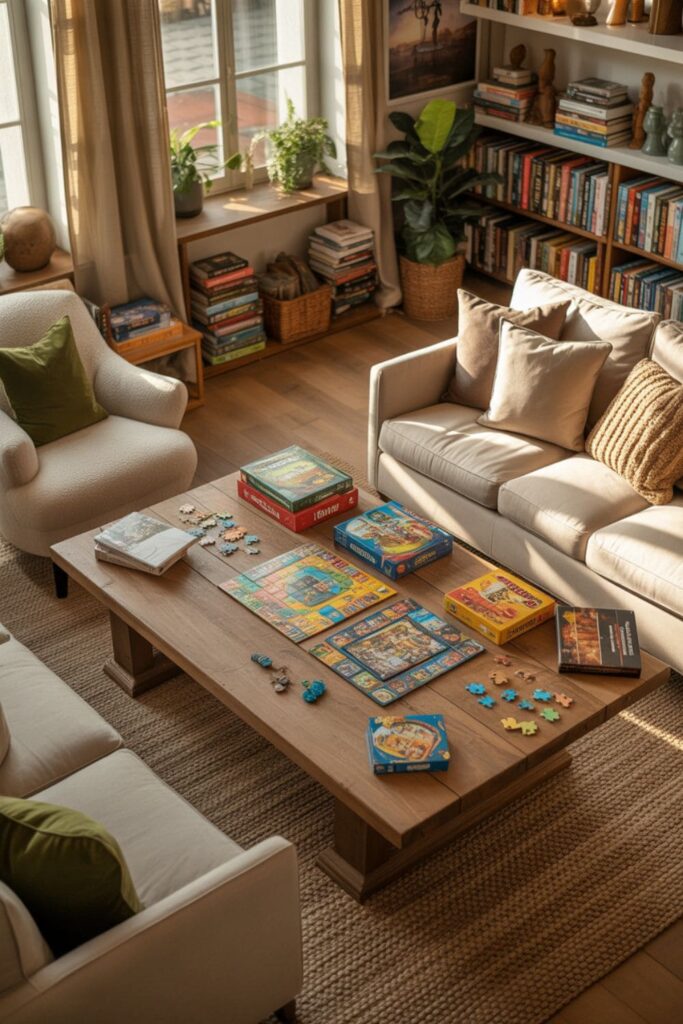
Entertainment doesn’t need electricity.
A large table.
Board games.
Puzzles in progress.
Shelves hold cards and boxes.
Not hidden.
Displayed.
This room invites participation.
Not passive watching.
You do things here.
Together.
And time moves differently.
10. The Nature-Inspired Living Room
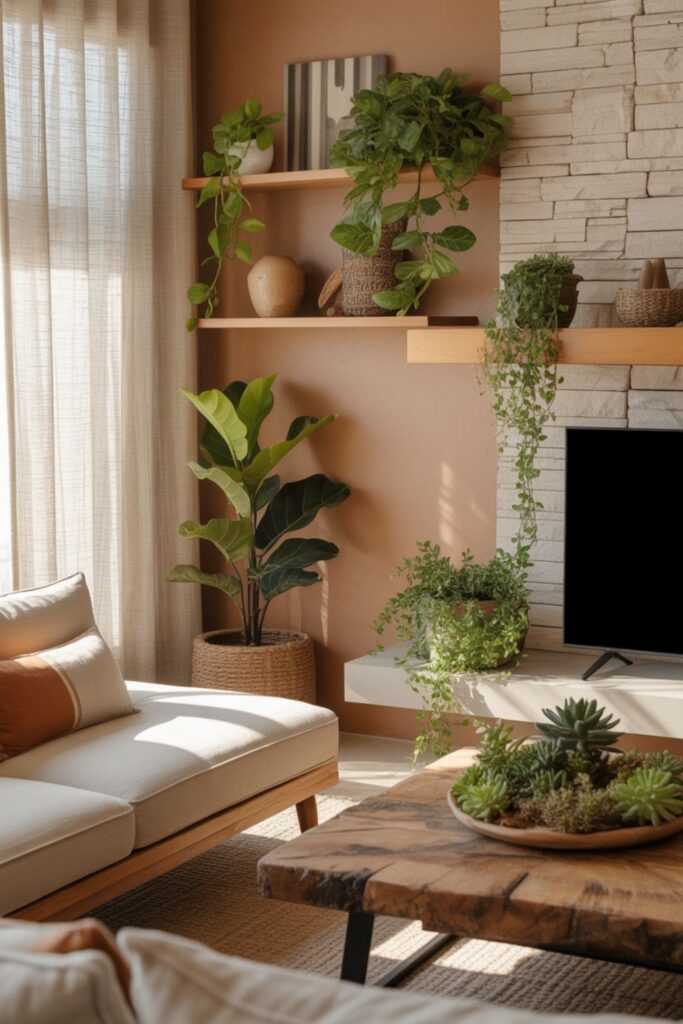
No TV means fewer distractions.
Which makes natural elements stand out.
Wood.
Stone.
Linen.
Earthy colors dominate.
Soft greens.
Warm browns.
Plants are everywhere.
Large ones.
Small ones.
This room feels grounded.
Organic.
Calm.
It doesn’t shout.
It whispers.
11. The Writing and Thinking Space
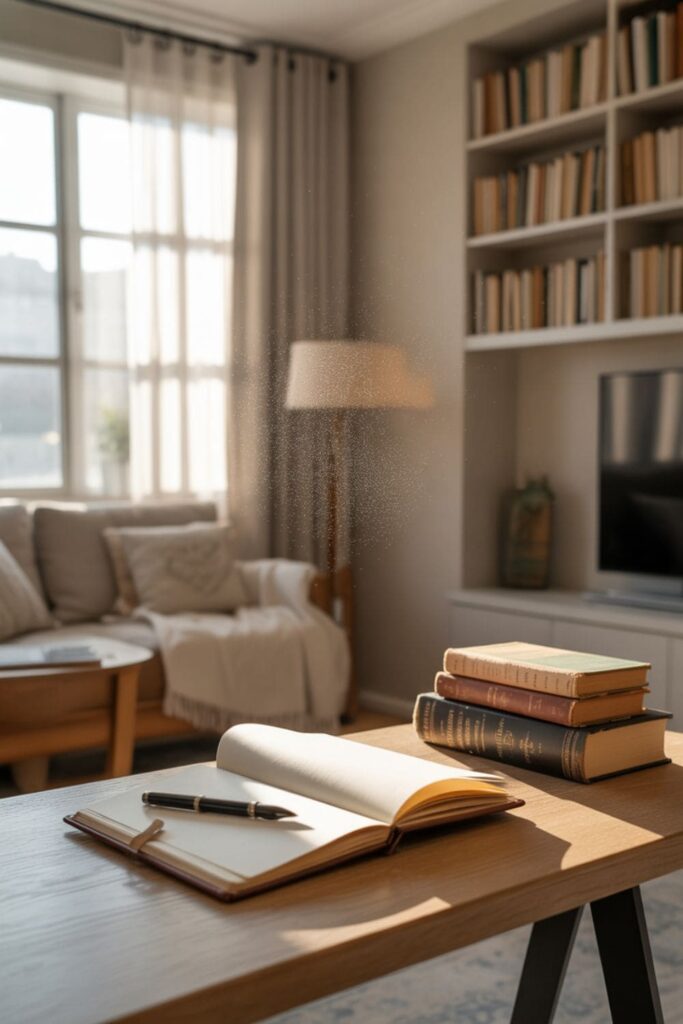
Some living rooms are meant for thought.
A desk near the window.
A chair that supports long sitting.
Good lighting.
Books and notebooks are within reach.
This room feels quiet.
Focused.
Personal.
It’s where ideas form.
Where thinking happens.
A TV would only interrupt.
12. The Social Hosting Living Room
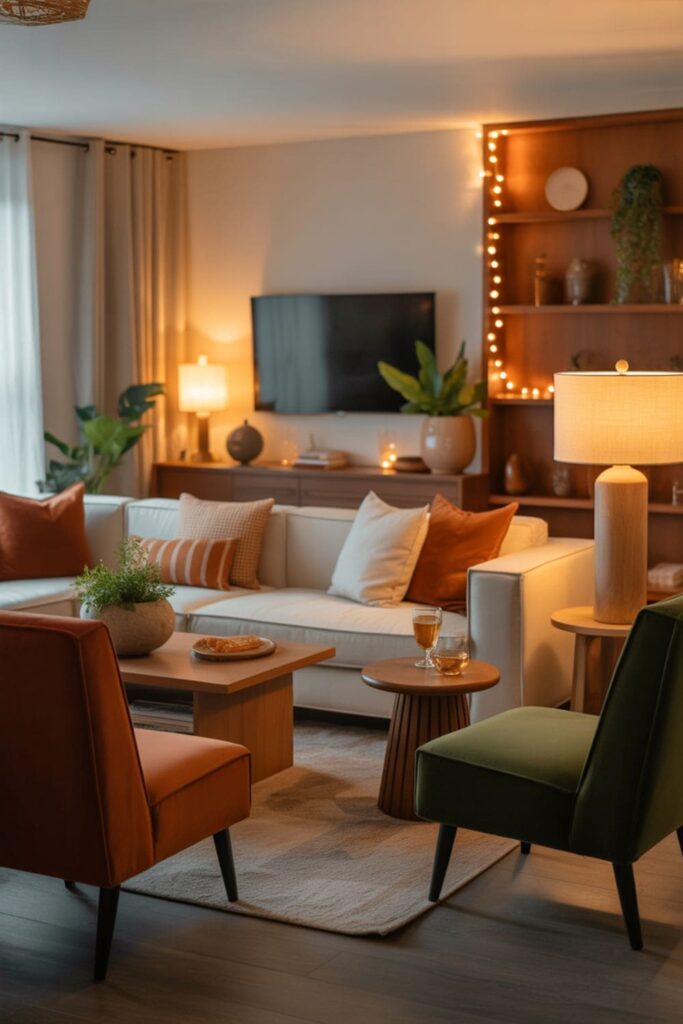
This room loves people.
Extra seating.
Movable chairs.
Side tables everywhere.
Nothing is fixed.
When guests arrive, the room adapts.
It changes shape.
It flows.
Without a TV, attention stays on faces.
Laughter fills the space.
This living room feels alive.
Not staged.
13. The Vintage-Inspired Living Room
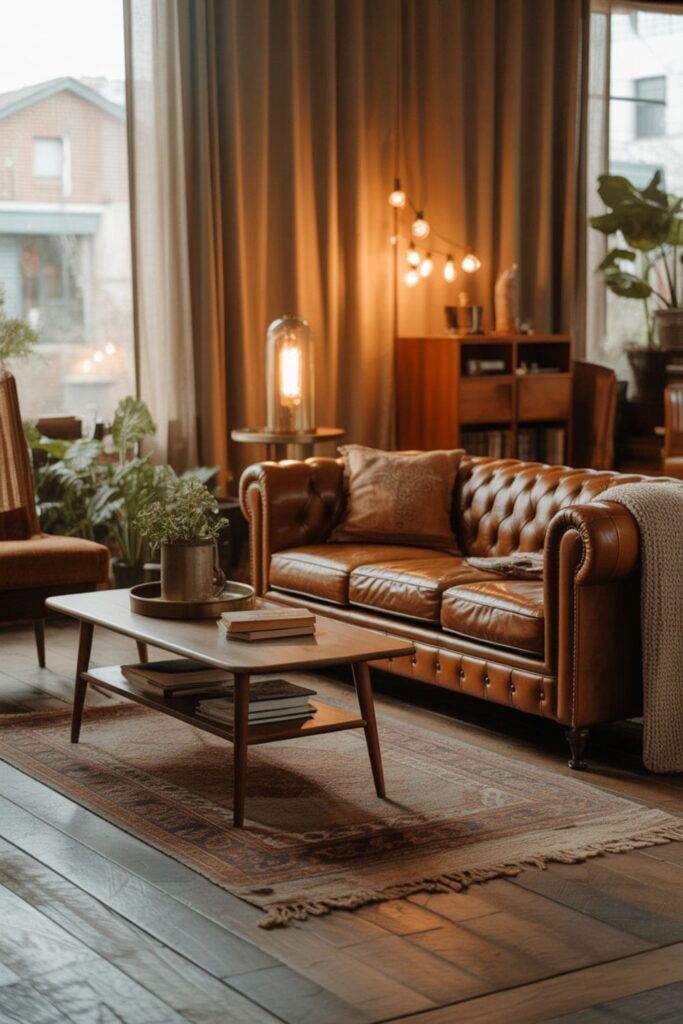
Old homes often didn’t plan for TVs.
And that works in their favor.
Antique furniture.
Layered rugs.
Soft lighting.
The room feels nostalgic.
Comforting.
Lived-in.
A TV would feel out of place here.
The charm comes from history.
Not technology.
14. The Meditation and Calm Room
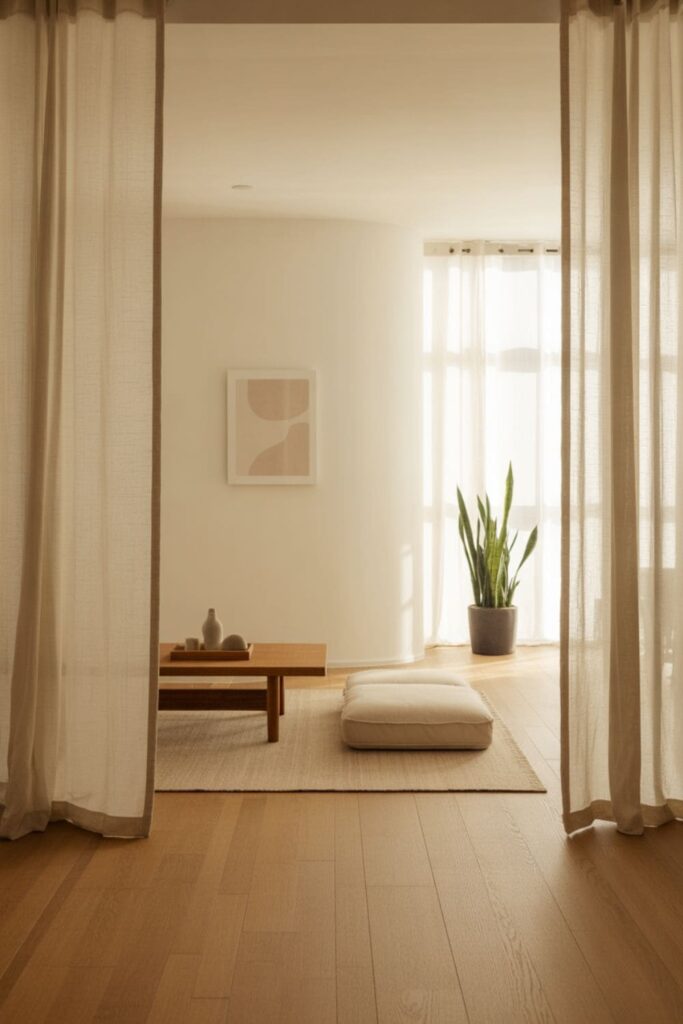
Some living rooms exist for stillness.
Neutral colors.
Soft textures.
Very little furniture.
A cushion.
A mat.
A small table.
This room invites presence.
Breathing.
Pauses.
It’s not empty.
It’s peaceful.
15. The Multi-Purpose Living Room
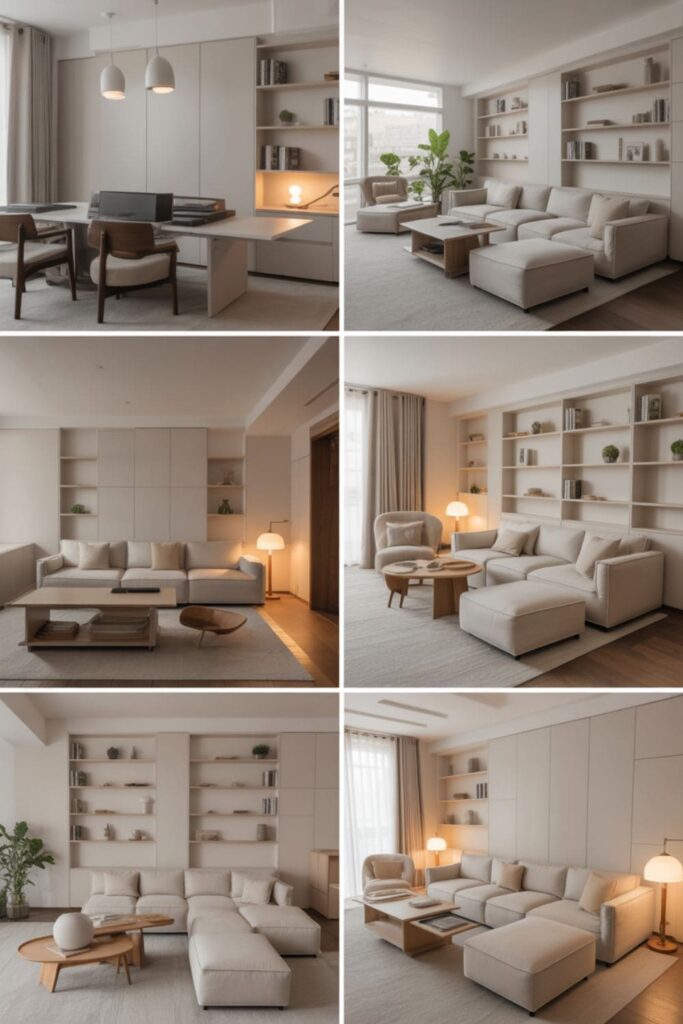
Not every room needs a single identity.
This living room changes throughout the day.
Morning reading.
Afternoon work.
Evening conversation.
Furniture is flexible.
Lighting is layered.
Without a TV dictating layout, the room adapts easily.
It works with you.
Not against you.
16. The Sunken Living Room Without a TV
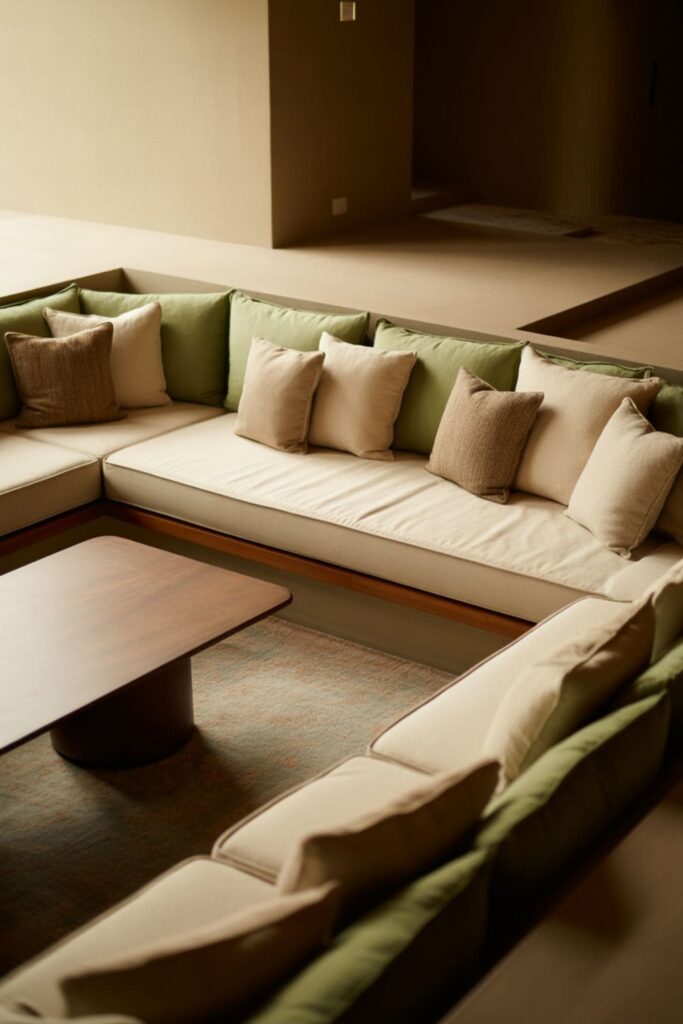
Sunken living rooms already feel special.
They pull you in.
They slow you down.
Without a TV, the focus stays on the architecture.
The depth.
The feeling of being enclosed but open.
Cushions line the edges.
A low table sits in the center.
This room feels intimate.
Almost secret.
17. The Fireplace-and-Books Combo Room
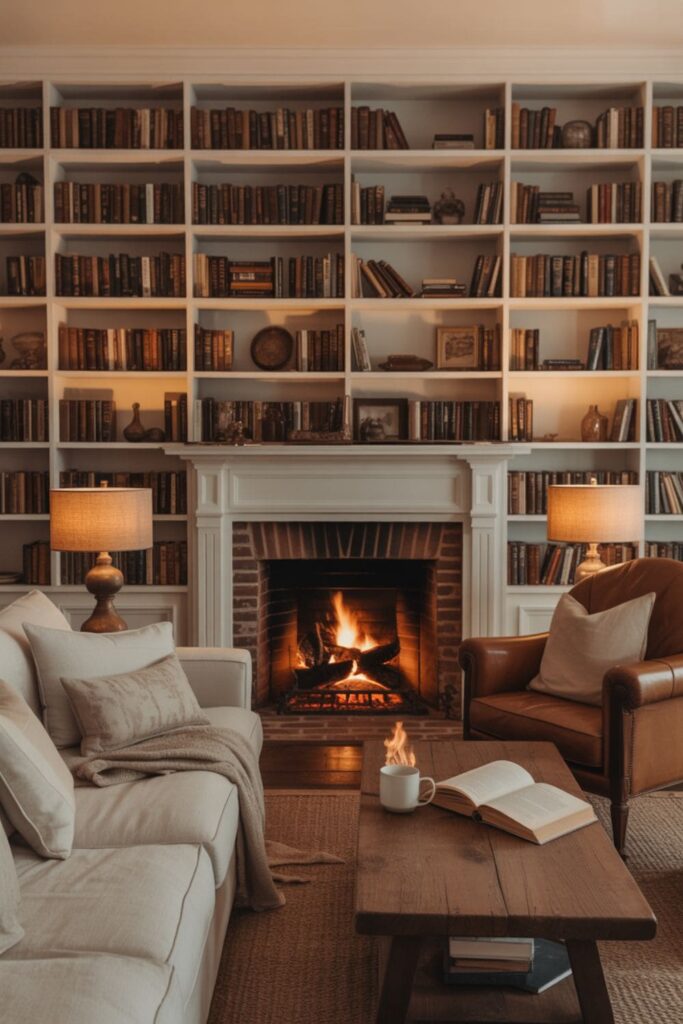
Some rooms balance two focal points.
A fireplace.
And books.
Shelves wrap around the fire.
Floor to ceiling.
You sit near warmth.
Surrounded by stories.
There’s no need for a screen here.
The atmosphere is enough.
18. The Light-Only Living Room
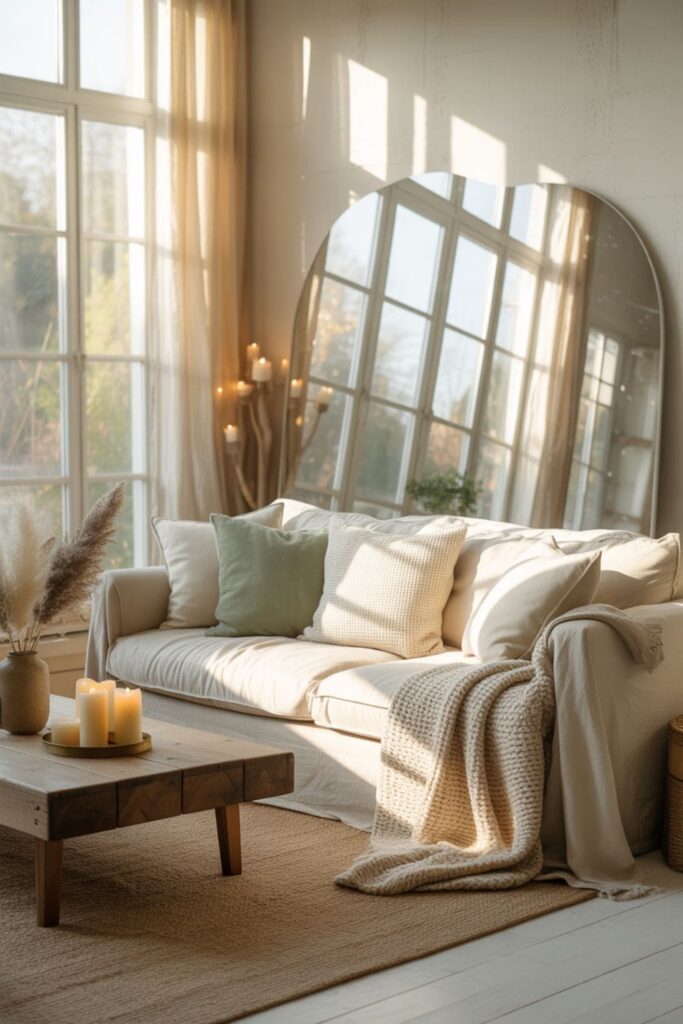
This room is designed around light.
Morning light.
Evening glow.
Mirrors reflect it.
Soft fabrics absorb it.
Without a TV, nothing blocks the walls.
Nothing steals attention.
The room changes throughout the day.
And that’s the point.
19. The Small Apartment Living Room Without a TV
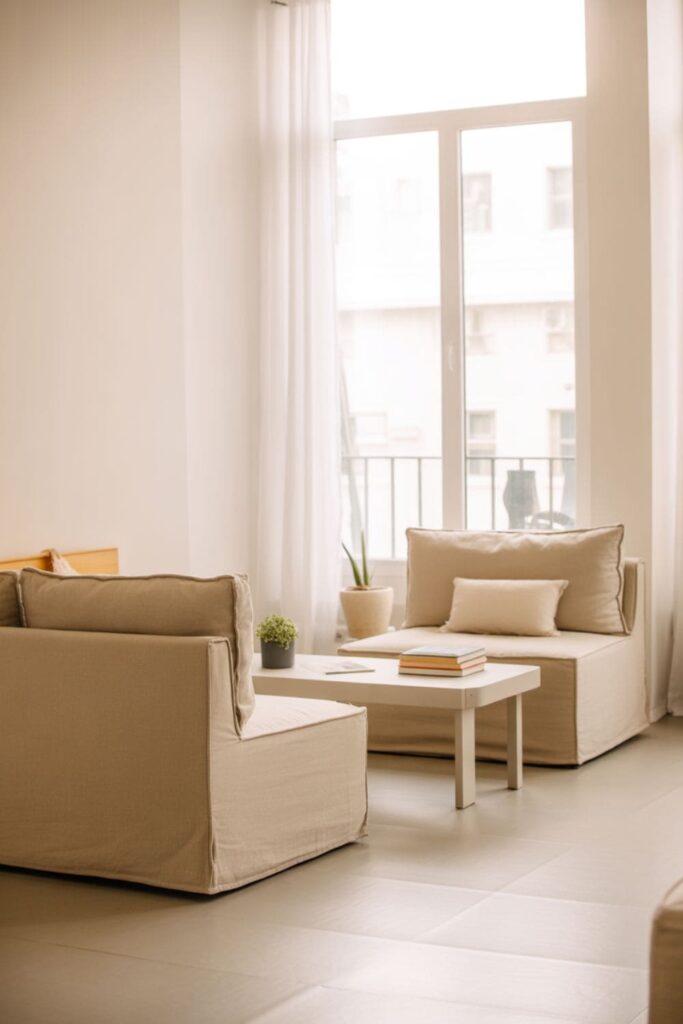
Small spaces benefit the most.
No TV means no bulky console.
No awkward angles.
Furniture stays compact.
Movement stays easy.
The room feels larger.
Less crowded.
More flexible.
Sometimes, less really is more.
20. The Rug-Centered Living Room
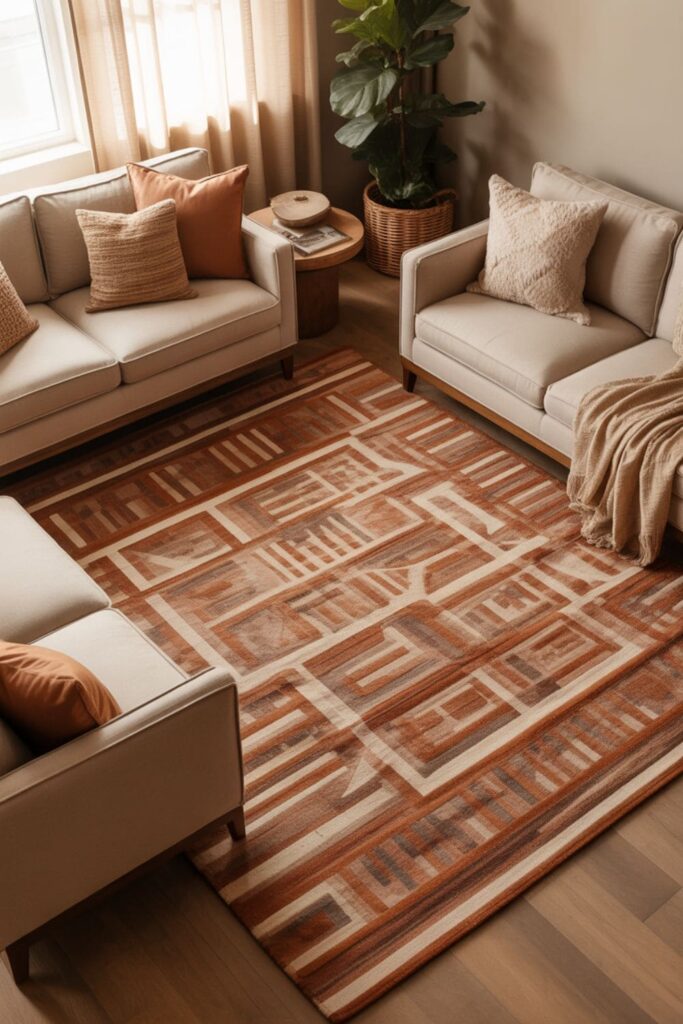
Here, the rug is the star.
Large.
Textured.
Beautiful.
Furniture frames it gently.
Never hides it.
Without a TV pulling focus upward, the eye stays grounded.
The room feels anchored.
It feels intentional.
Designed from the floor up.
Related: 16+ Living Room Ideas With Recliners
Conclusion
A living room without a TV is not a limitation.
It’s a choice.
A choice to design with intention.
To prioritize connection.
To slow things down.
These rooms don’t reject entertainment.
They redefine it.
Conversation becomes entertainment.
Comfort becomes entertainment.
Presence becomes entertainment.
Not every home needs a TV-free living room.
But every home benefits from at least one space that isn’t ruled by a screen.
Sometimes, removing one object makes room for everything else that matters.
And that’s the real beauty of a living room without a TV.

