
A living room is where life happens. People relax there, watch TV, talk with family, and spend evenings after long days.
But when you have pets, the living room becomes something more. It turns into a shared space for both humans and animals with lots of fur and scratches.
A pet-friendly living room should still feel beautiful and comfortable. At the same time, it needs to handle fur, scratches, muddy paws, and daily activity. The goal is balance.
Below are 20 pet-friendly living room ideas that help create a stylish space while keeping your pets happy and your home practical.
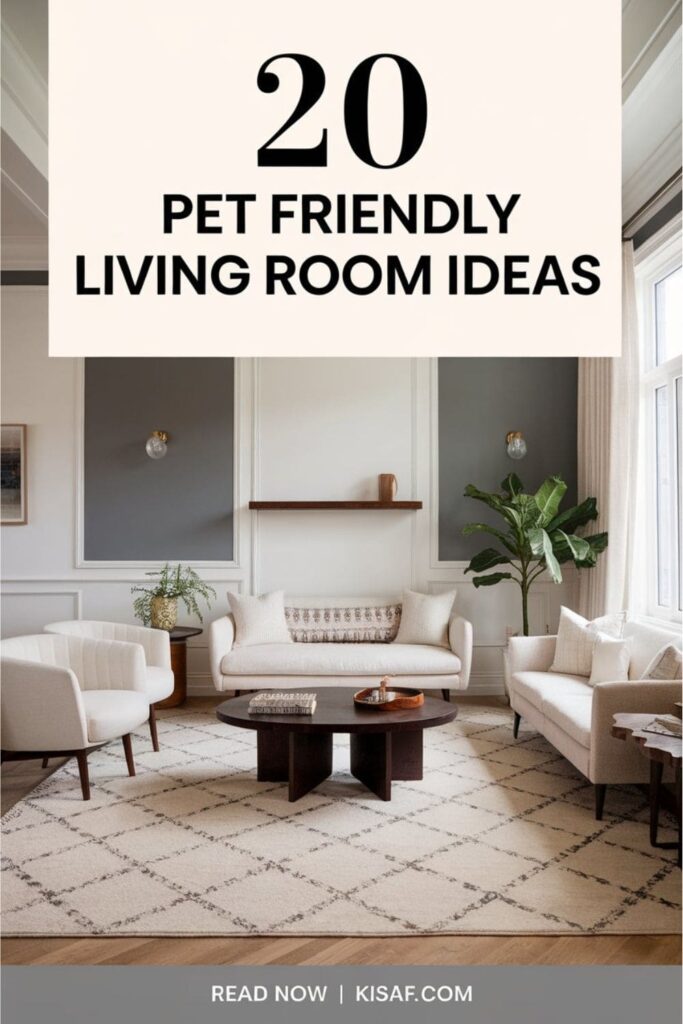
Pet-Friendly Living Room Ideas
1. Choose Pet-Friendly Fabrics
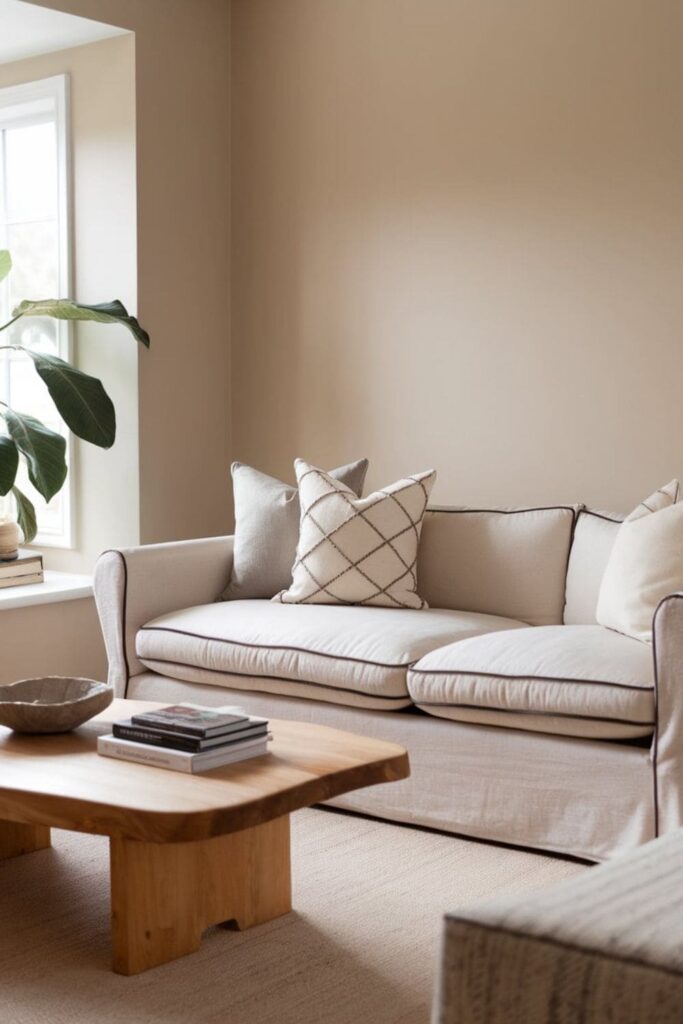
Not every fabric works well in a home with pets. Some materials attract fur. Others stain easily.
That is why choosing the right upholstery makes a huge difference.
Look for tightly woven fabrics such as microfiber, canvas, or performance fabrics.
These materials resist scratches better and are easier to clean. Pet hair also does not cling as much.
2. Add Stylish Pet Beds
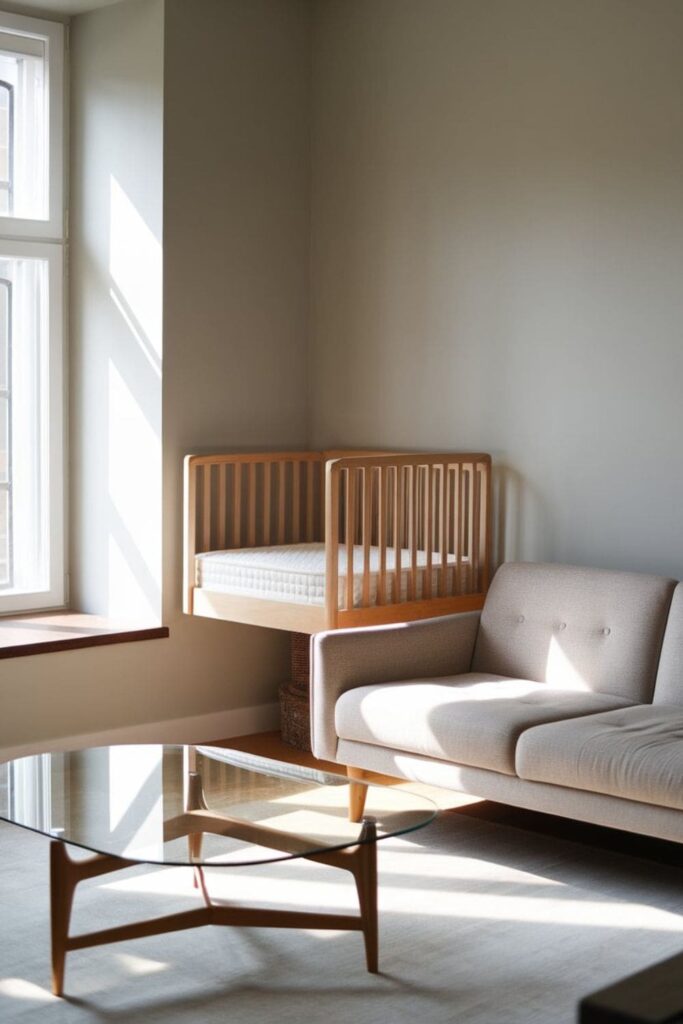
Pets need their own comfortable place to relax. Giving them a dedicated bed helps protect your furniture.
Instead of hiding the pet bed in a corner, make it part of the design.
Choose a bed that matches your living room color palette. Neutral fabrics or woven textures work well.
Place it near the sofa or coffee table so your pet still feels close to the family.
3. Use Durable Coffee Tables
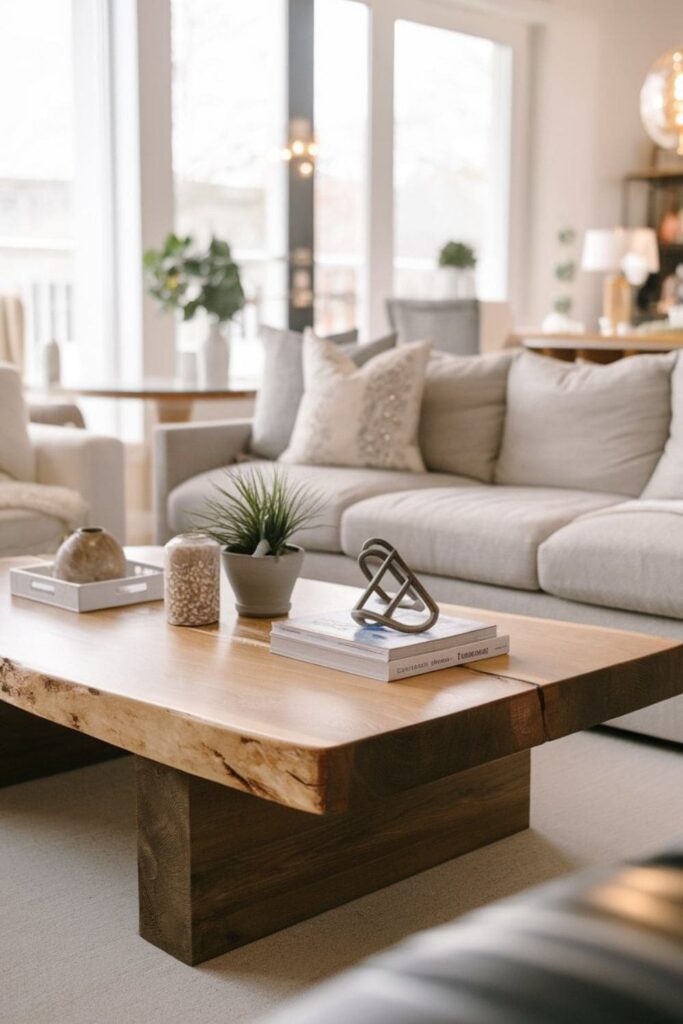
Coffee tables are often the center of the living room.
Pets may brush against them. Dogs sometimes wag their tails into them. Cats may even jump onto them.
Choose tables made from sturdy materials like wood, metal, or stone. Glass tables can work too, but they often show nose prints and smudges more easily.
Durable furniture keeps the room functional and stress-free.
4. Keep Pathways Open
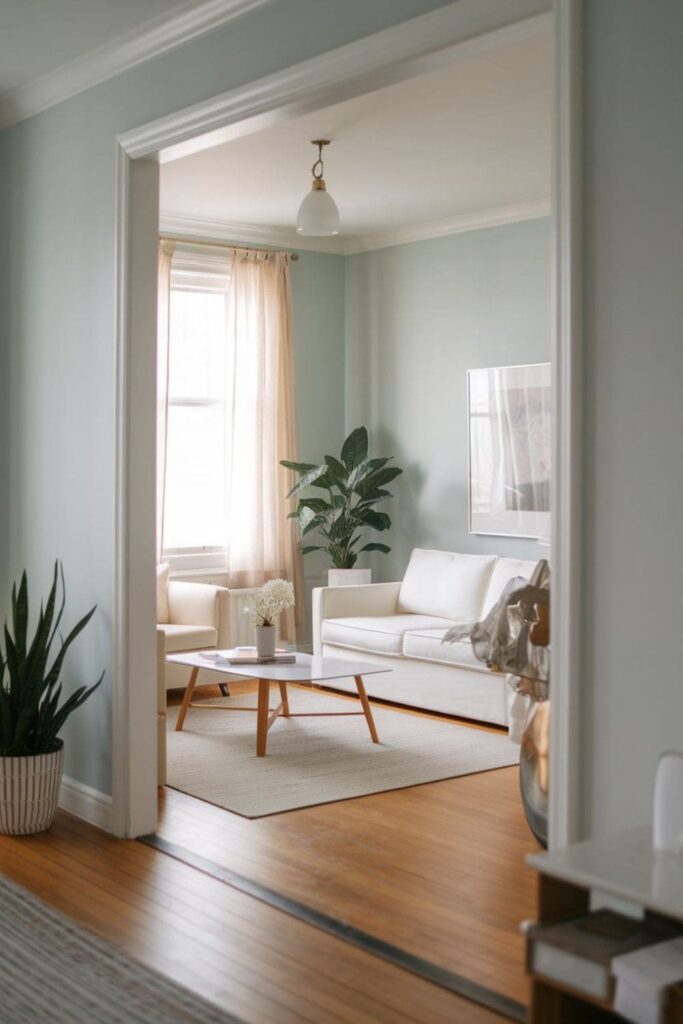
Pets move constantly. They run from one side of the room to the other.
A crowded layout can make this difficult. Furniture that blocks pathways may cause accidents or knocked-over items.
Instead, keep the layout simple. Leave open space between key pieces of furniture.
This makes the living room feel larger while giving pets room to move freely.
5. Choose Pet-Safe Decor
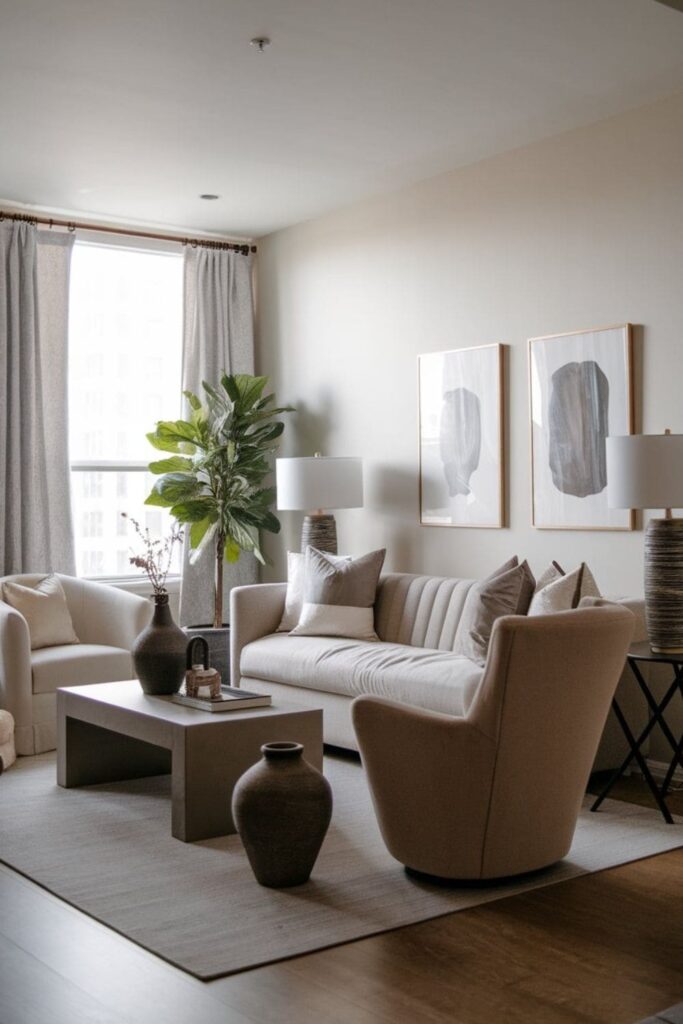
Some decorative items can be risky in homes with pets.
Fragile objects placed near edges may fall easily. Small items can also become chew toys.
Choose sturdy decor pieces instead. Heavier vases, stable lamps, and durable decorations are better choices.
This reduces accidents and keeps your living room safe for everyone.
6. Choose Darker Sofa Colors
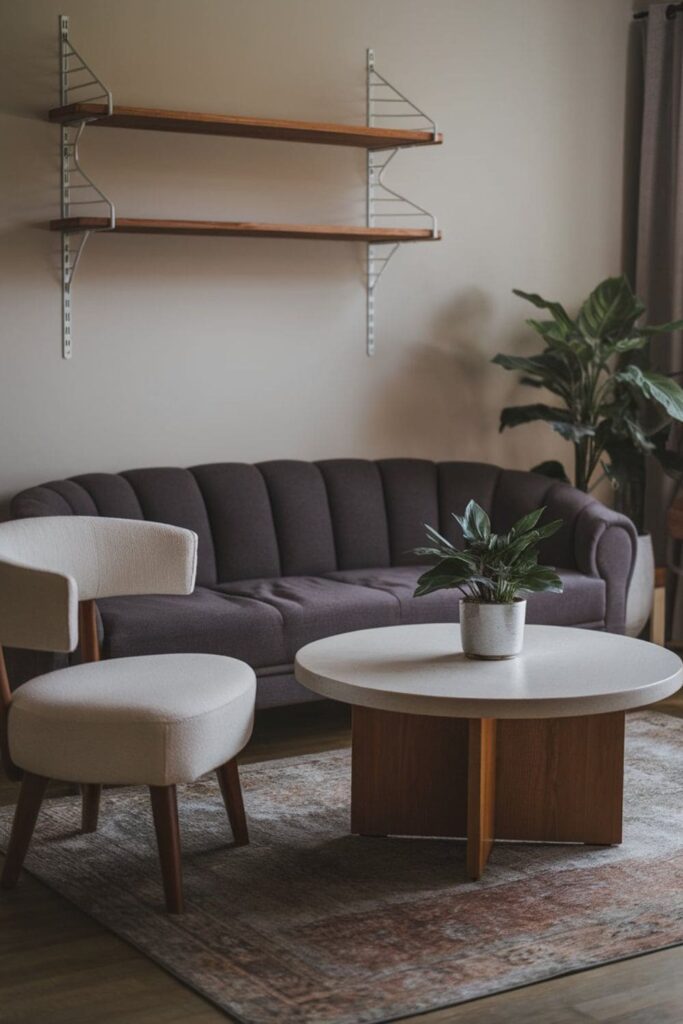
Light sofas can look beautiful. But in homes with pets, they can be hard to maintain.
Fur, dirt, and small stains show up quickly on light upholstery. Even a clean pet can leave visible marks after a day of playing.
Darker colors help hide everyday wear. Shades like charcoal, deep gray, brown, or navy work especially well.
They make the room feel grounded while keeping the furniture looking clean longer.
7. Choose Furniture With Legs
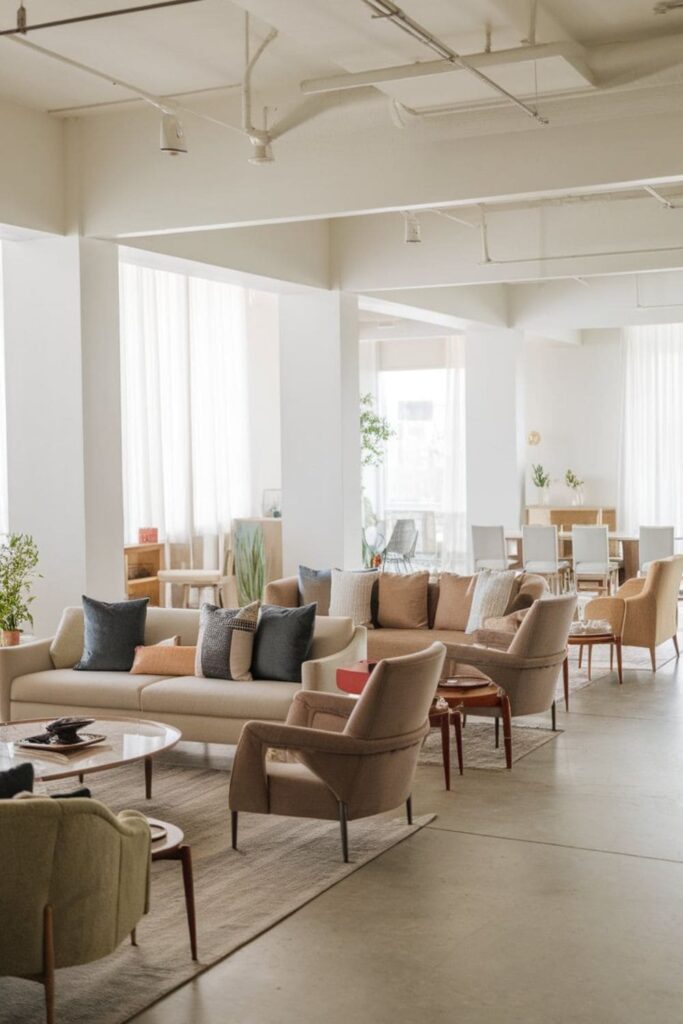
Furniture that sits directly on the floor can trap dust, fur, and pet toys underneath.
Pieces with raised legs create more breathing room. They allow air and light to move through the space.
Cleaning also becomes easier. A vacuum or broom can slide underneath without much effort.
This small design choice can make a living room feel lighter and easier to maintain.
8. Use Covered Storage Baskets
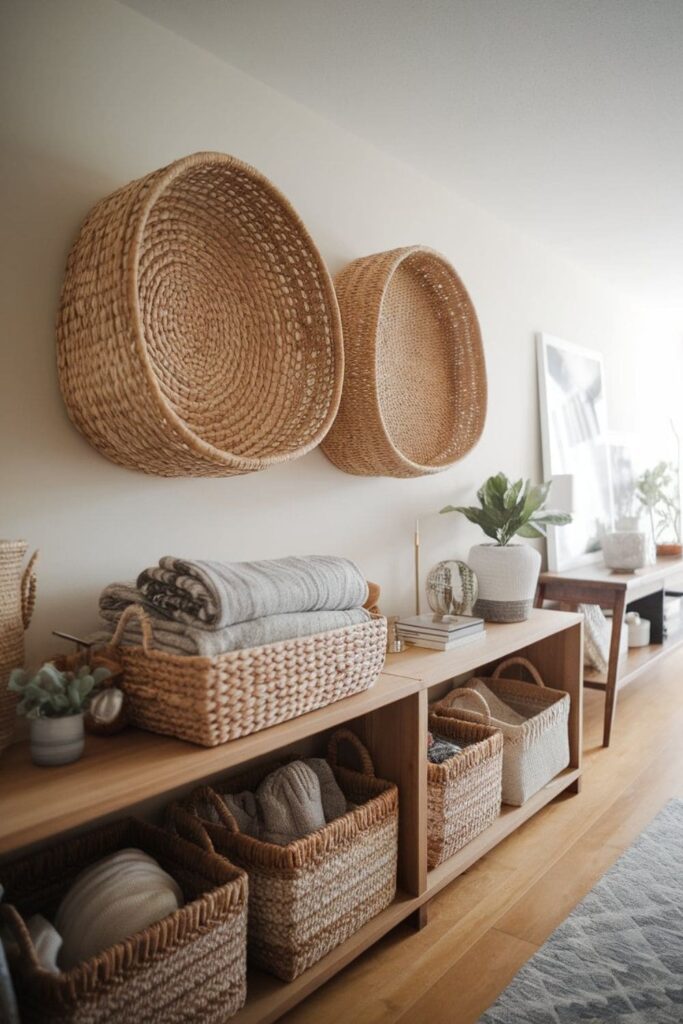
Open baskets are great for organization, but pets sometimes treat them like toy boxes.
Covered baskets provide better control. They hide clutter and protect the items inside.
You can store extra pet supplies, grooming tools, or even blankets inside them.
Natural woven baskets also add warmth and texture to the living room.
9. Add an Ottoman Instead of a Hard Table
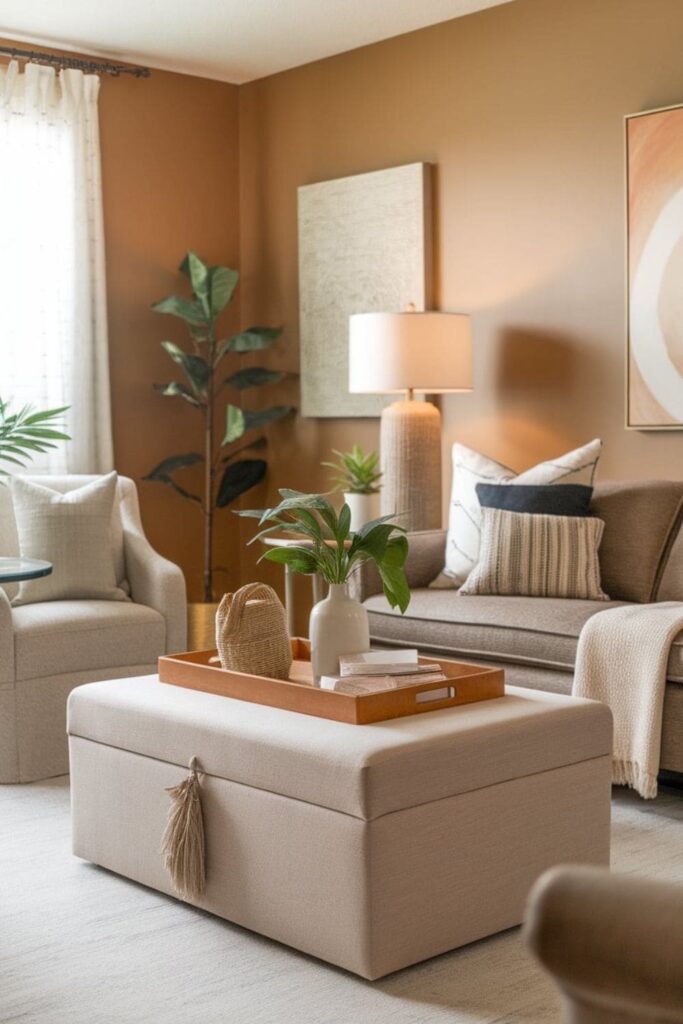
Ottomans are softer than traditional coffee tables.
If a dog bumps into one while running, the impact is gentle. They also double as extra seating or footrests.
Many ottomans include hidden storage inside. That space can hold pet toys or extra blankets.
10. Keep Plants Pet-Safe

Plants add life to a living room. They improve the atmosphere and make the space feel fresh.
However, not all plants are safe for pets. Some varieties can be harmful if chewed.
Choose pet-safe options like spider plants or certain palms. You can also place plants on high shelves or stands where pets cannot easily reach them.
Related: Pet Safe Indoor Plants Every Petowner Should Own!
11. Create a Feeding Station Nearby
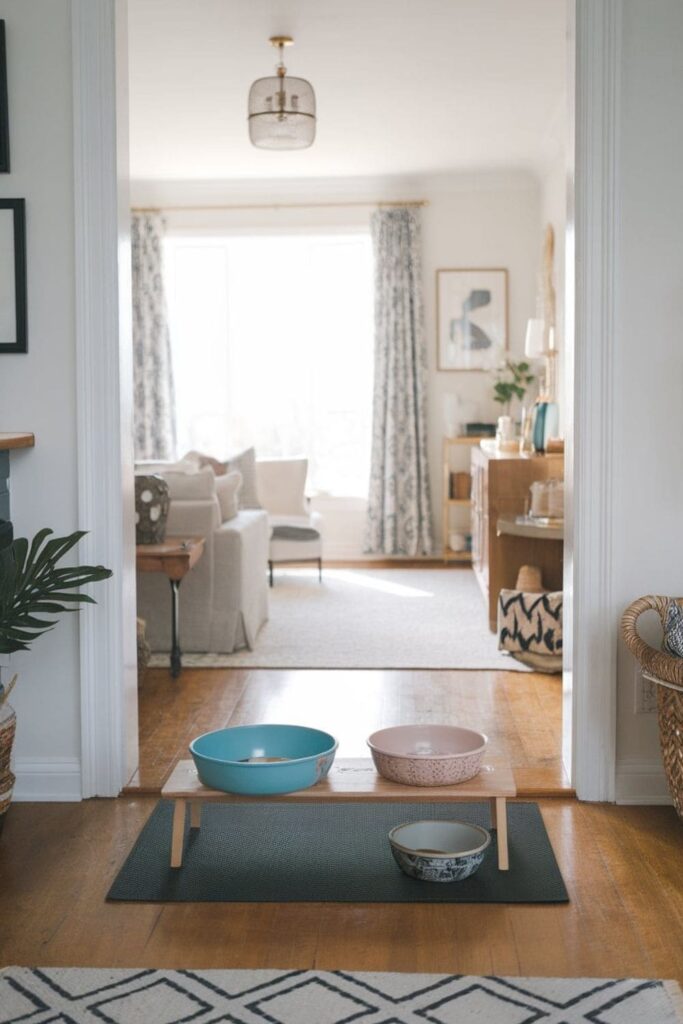
Some homes place pet food bowls in the kitchen. Others prefer a small feeding area near the living room.
If space allows, you can create a neat feeding station with a small mat and elevated bowls.
This keeps food spills contained. It also gives pets a consistent place to eat.
Keeping the station tidy helps the living room remain organized.
12. Add a Window Seat for Pets

Pets love watching the outside world.
Dogs enjoy seeing people walk by. Cats can sit for hours watching birds and trees move in the wind.
A small window seat creates a perfect observation spot. Add a soft cushion and place it near a bright window.
It becomes a peaceful place for pets to relax during the day.
13. Use Low-Maintenance Decor
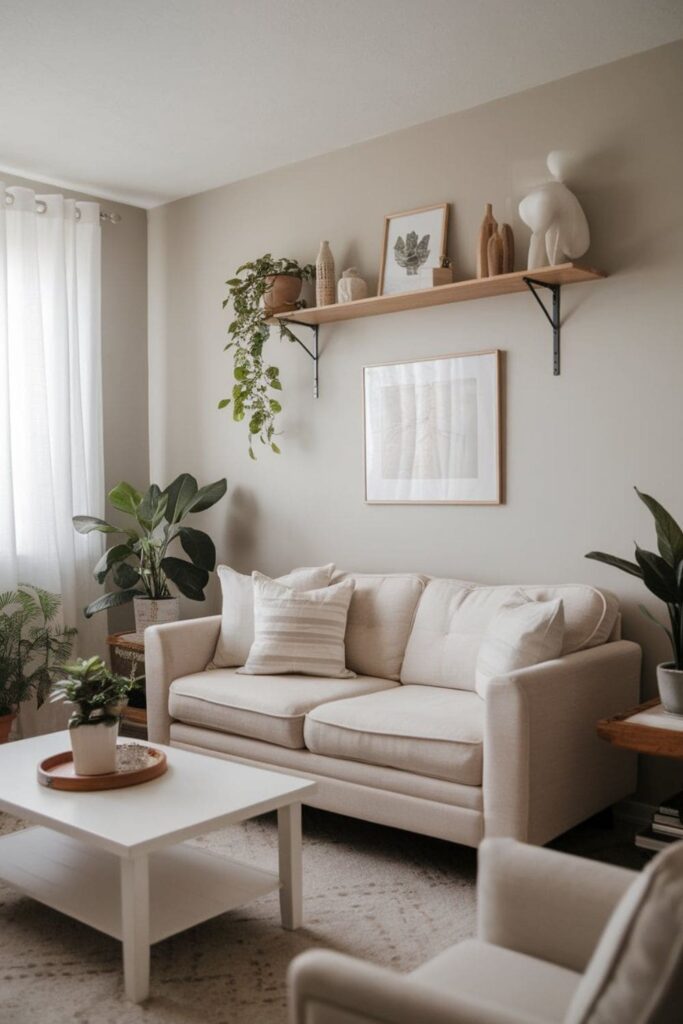
Some living rooms require constant adjusting. Items shift, decorations fall, and surfaces get messy.
In homes with pets, simpler decor works best.
Choose sturdy decorations that stay in place. A few large pieces often look better than many small items.
The room feels calm and easy to manage.
14. Choose Furniture With Removable Cushions
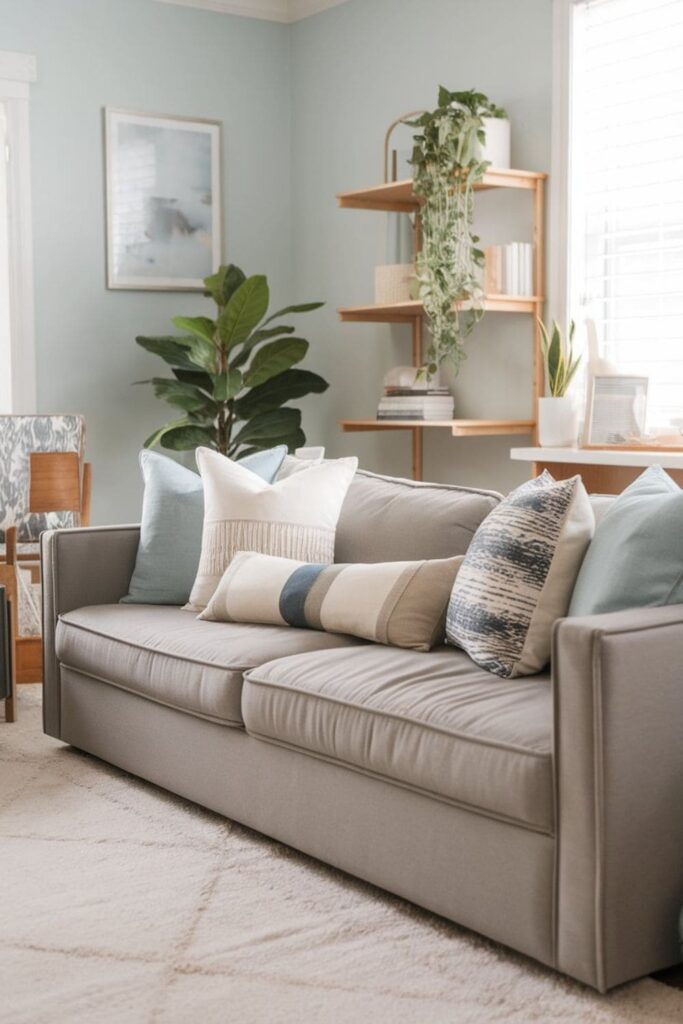
Removable cushions make cleaning much easier.
Fur often collects between cushions and along seams. Being able to lift them off allows you to vacuum the entire sofa.
It also helps if cushions need occasional washing or spot cleaning.
This simple feature keeps furniture looking fresh longer.
15. Create a Toy Rotation System
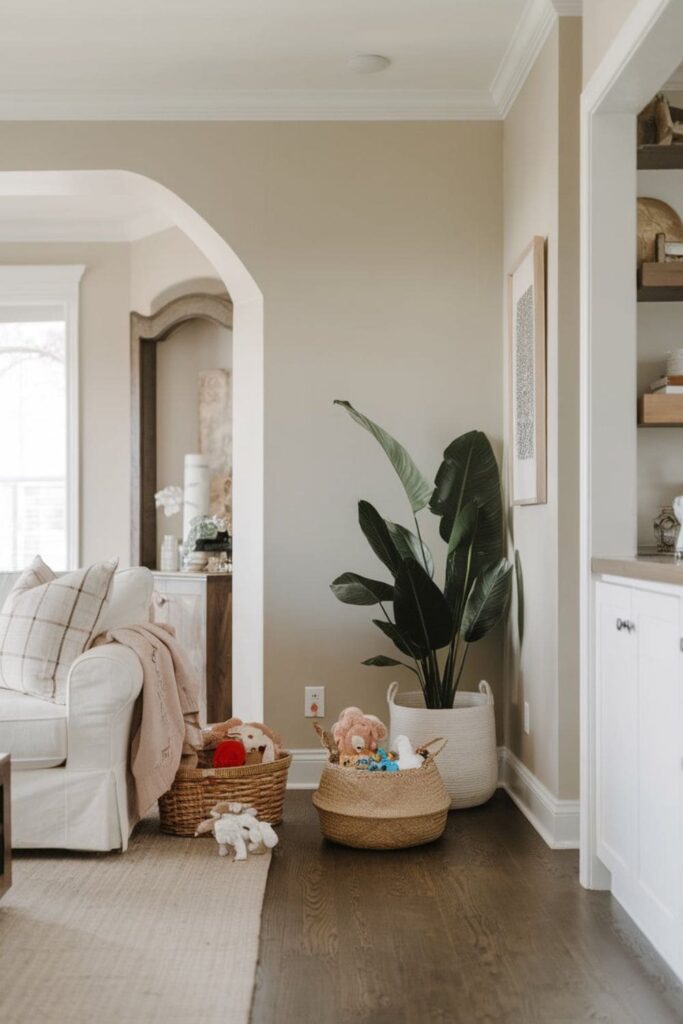
Too many toys can make a living room look cluttered.
Instead of leaving all toys out at once, rotate them.
Keep a few toys in a basket and store the rest elsewhere. Every week or two, switch them out.
Pets stay interested in their toys, and the room feels less messy.
16. Keep Air Circulation Strong

Pets can sometimes make a room feel stuffy.
Good air circulation keeps the living room fresh. Open windows when possible or use a quiet fan to move air through the space.
Air purifiers can also help remove pet hair and odors from the air.
The result is a cleaner and more comfortable environment.
17. Add Window Perches for Cats

Cats love height as well as enjoy watching birds, people, and movement outside.
A window perch can give them their own viewing spot.
Place a small platform, shelf, or cat perch near a sunny window. Add a soft cushion so it becomes comfortable for naps.
18. Design a Relaxation Spot for Pets
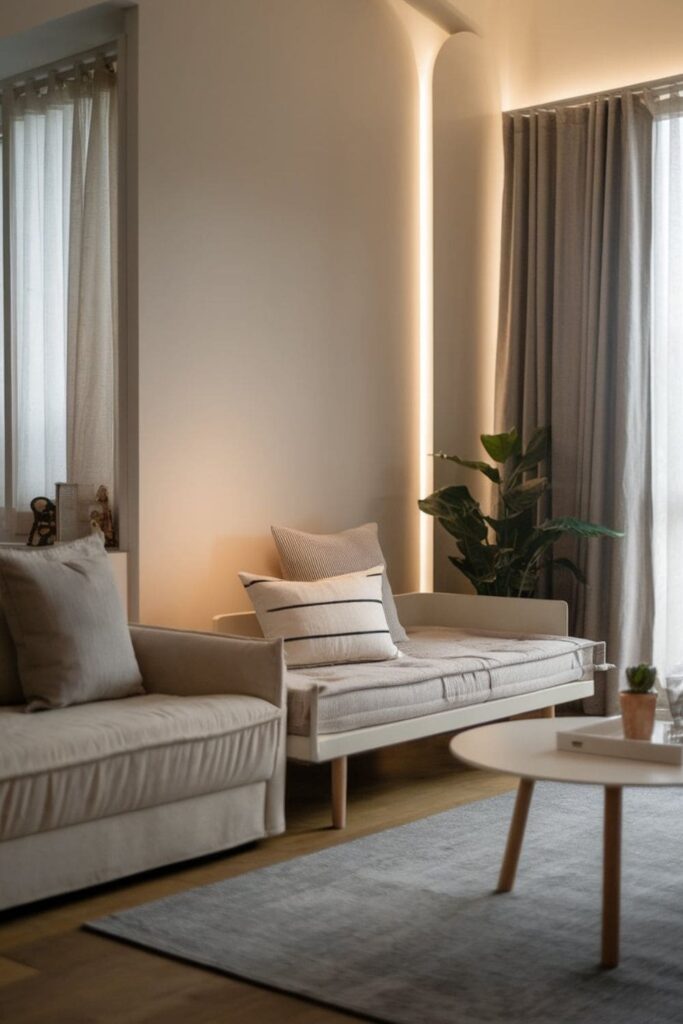
Just like people, pets appreciate calm spaces.
Create a small relaxation corner in the living room with a soft cushion or bed. Place it in a quiet area but still within view of the family.
Many pets enjoy resting where they can see their owners.
19. Use Leather Carefully
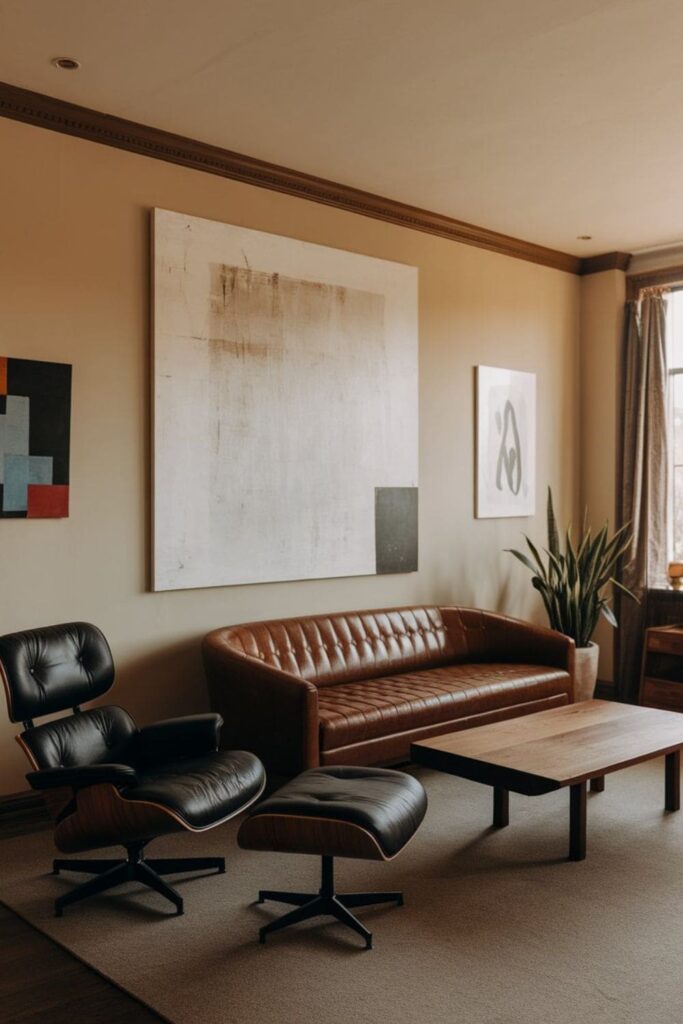
Leather furniture can actually work well with pets.
It does not trap fur the way fabric does. Hair wipes off easily with a cloth.
However, scratches can appear over time. Some people enjoy the natural patina that develops.
Distressed or textured leather often hides marks better than smooth finishes.
20. Use Neutral Colors
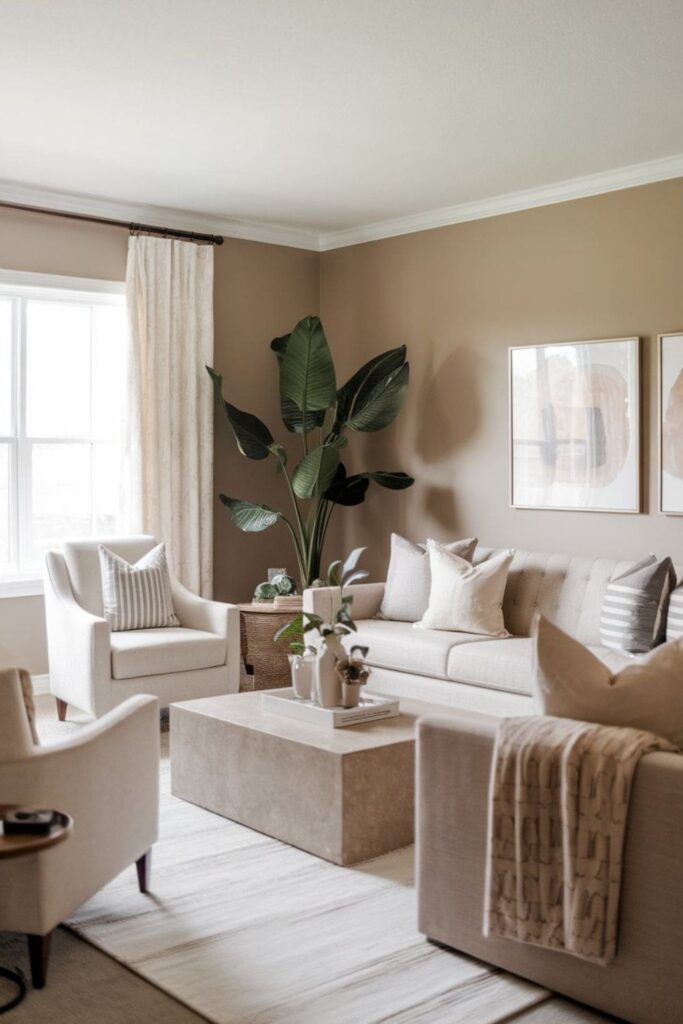
Neutral colors work very well in pet-friendly living rooms.
Shades like beige, gray, taupe, and soft brown hide fur better than pure white or very dark colors.
They also create a calm atmosphere in the room.
Neutral palettes make it easier to change decor later without replacing major furniture pieces.
Related: Neutral Living Room Ideas You’ll Love!
Conclusion
Living with pets does not mean sacrificing style. A living room can still look beautiful while being practical for everyday life with animals.
The key is choosing materials, furniture, and layouts that handle real activity. Durable fabrics, easy-clean surfaces, and smart storage solutions all help create a balanced space.
When design works with your lifestyle, the room feels calmer and easier to maintain.

