
Low ceilings can feel limiting.
They can make a living room feel tight.
Sometimes even uncomfortable.
But a low ceiling is not a design dead end.
Not at all.
With the right choices, a low-ceiling living room can feel open, stylish, and welcoming.
It can even feel intentional.
Designed.
Balanced.
Just ideas that work.

Living Room Ideas for Low Ceilings
1. Use Light Colors on Walls and Ceiling
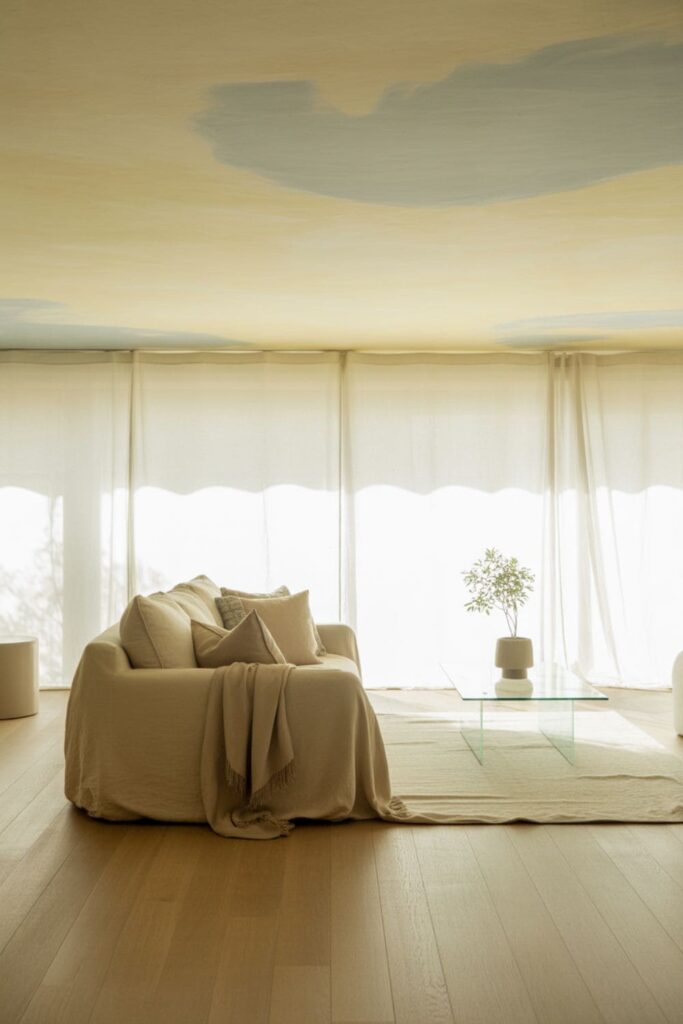
Color matters.
A lot.
Light shades reflect light.
They visually lift the space.
White is the obvious choice.
But it’s not the only one.
Cream.
Soft beige.
Pale gray.
Even light pastel tones.
Paint the ceiling the same color as the walls.
This removes harsh visual breaks.
The room feels taller instantly.
Avoid dark ceilings.
They push everything down.
2. Choose Low-Profile Furniture
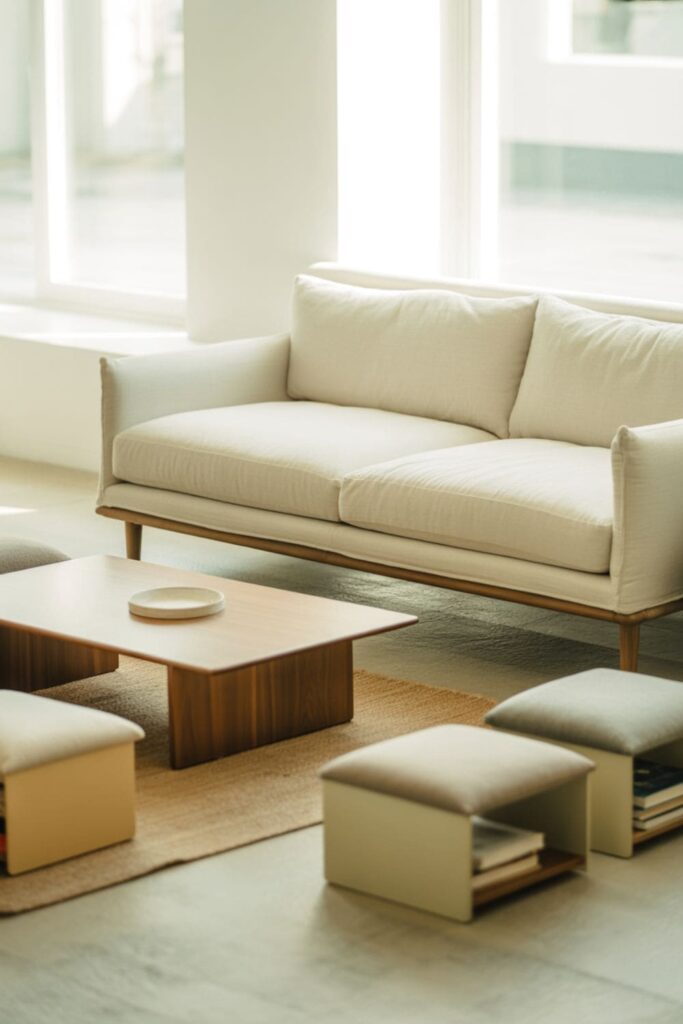
Furniture height is critical.
Tall sofas fight low ceilings.
Low-profile seating works better.
Sofas with short legs.
Low backs.
Floor-hugging furniture creates breathing room above.
Your eye sees more vertical space.
Coffee tables should also stay low.
Skip bulky pieces.
The goal is simple.
More air above.
Less visual weight below.
3. Embrace Vertical Lines
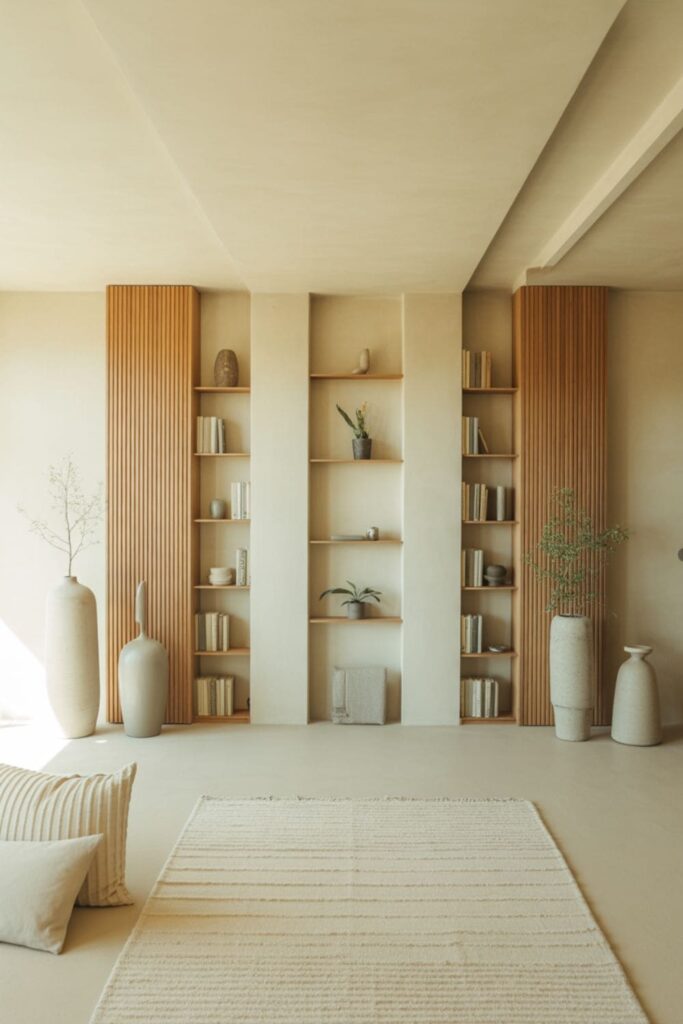
Vertical elements trick the eye.
They pull attention upward.
Think vertical wall panels.
Tall narrow shelving.
Slim bookcases.
Even subtle vertical patterns help.
Stripes.
Grooved textures.
Avoid horizontal-heavy designs.
They widen the room but lower the ceiling visually.
Height is your friend here.
Use it wisely.
4. Use Curtains Strategically
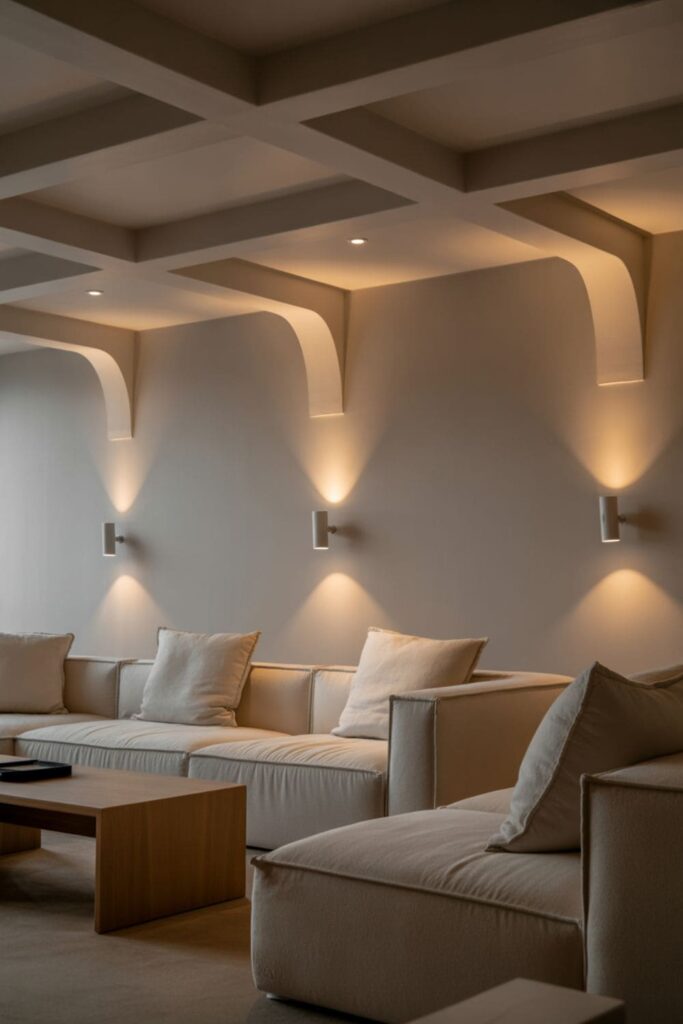
Curtains can help.
Or hurt.
Mount curtain rods close to the ceiling.
Not just above the window.
Let curtains fall all the way to the floor.
This elongates the wall.
Choose light fabrics.
Sheer or semi-sheer works best.
Avoid thick, heavy drapes.
They weigh the room down.
5. Skip Hanging Light Fixtures
Low ceilings and hanging lights don’t mix.
At least not usually.
Pendant lights and chandeliers can feel intrusive.
They visually lower the ceiling further.
Instead, use flush-mount or semi-flush lighting.
Recessed lights are even better.
Wall sconces are another great option.
They free up ceiling space.
Lighting should disappear into the design.
Not dominate it.
6. Add Mirrors Thoughtfully
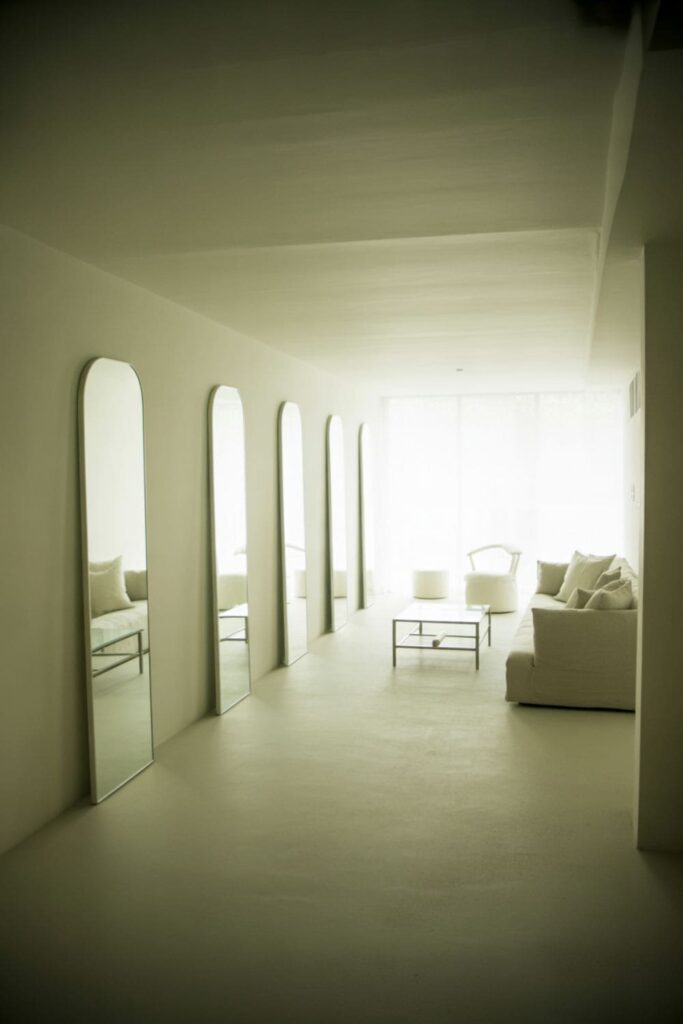
Mirrors are powerful.
Especially in tight spaces.
They reflect light.
They create depth.
Place mirrors opposite windows when possible.
Natural light bounces around the room.
Tall mirrors work better than wide ones.
They emphasize height.
Avoid heavy frames.
Keep them thin and minimal.
7. Keep the Floor Visible
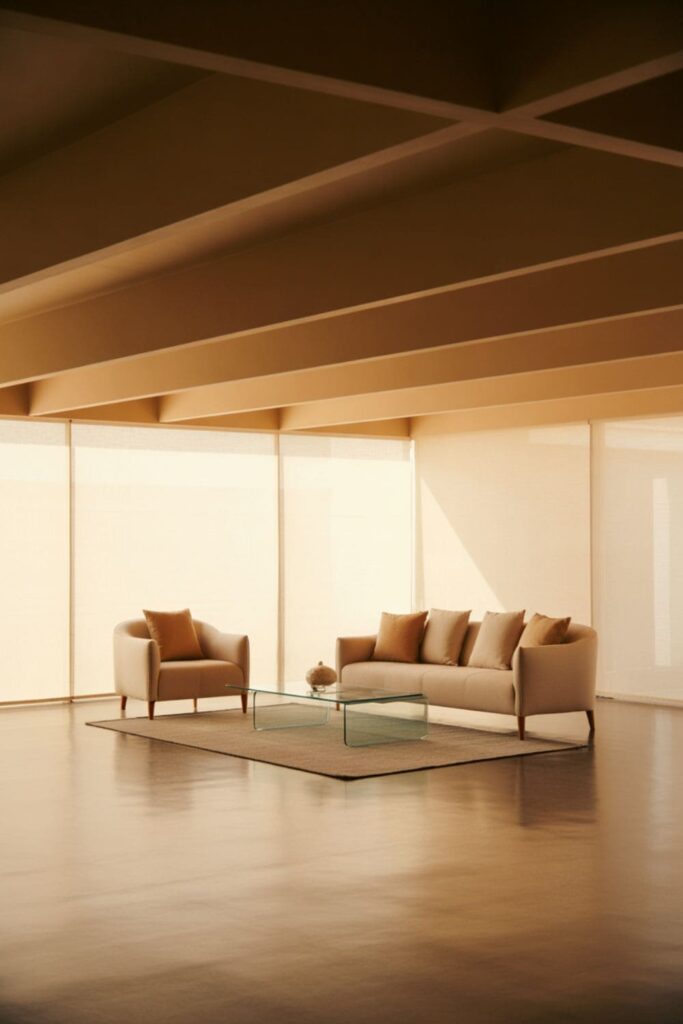
A cluttered floor shrinks a room.
Fast.
Use furniture with exposed legs.
It creates openness.
Avoid oversized rugs that overwhelm the space.
Choose appropriately scaled rugs.
Glass coffee tables also help.
They visually disappear.
The more floor you see, the taller the room feels.
Related: 16+ Living Room Lighting Ideas
8. Choose Artwork Carefully
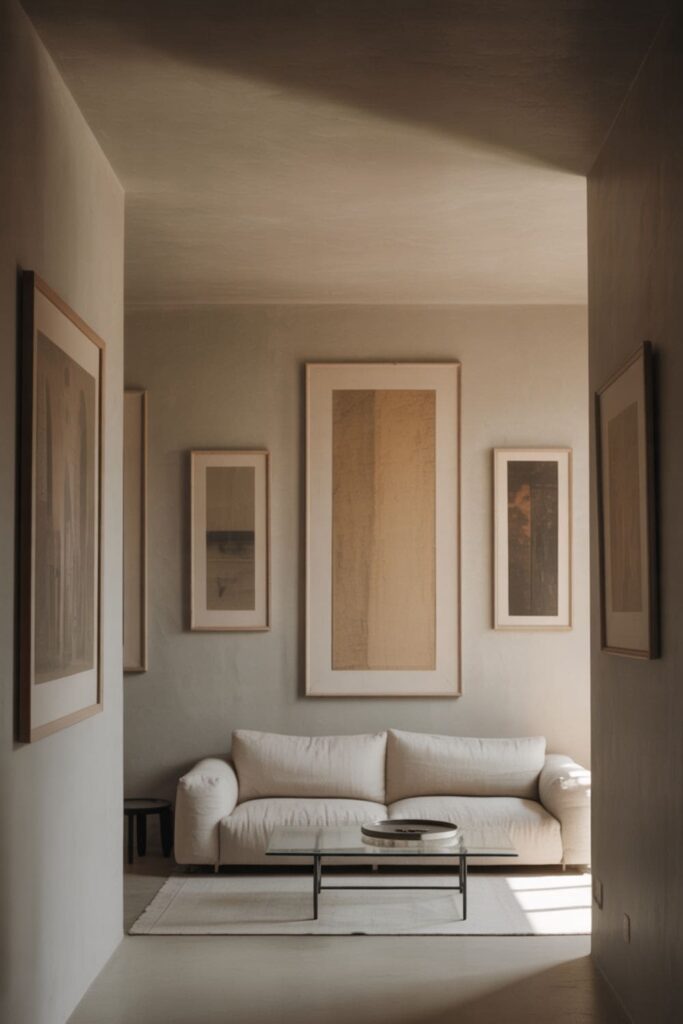
Artwork placement matters.
More than you think.
Hang art slightly higher than usual.
Not too high.
Just enough.
Vertical art pieces are ideal.
They draw the eye upward.
Avoid large horizontal galleries at eye level.
They cut the wall visually.
Less art is often better in low-ceiling rooms.
Give each piece room to breathe.
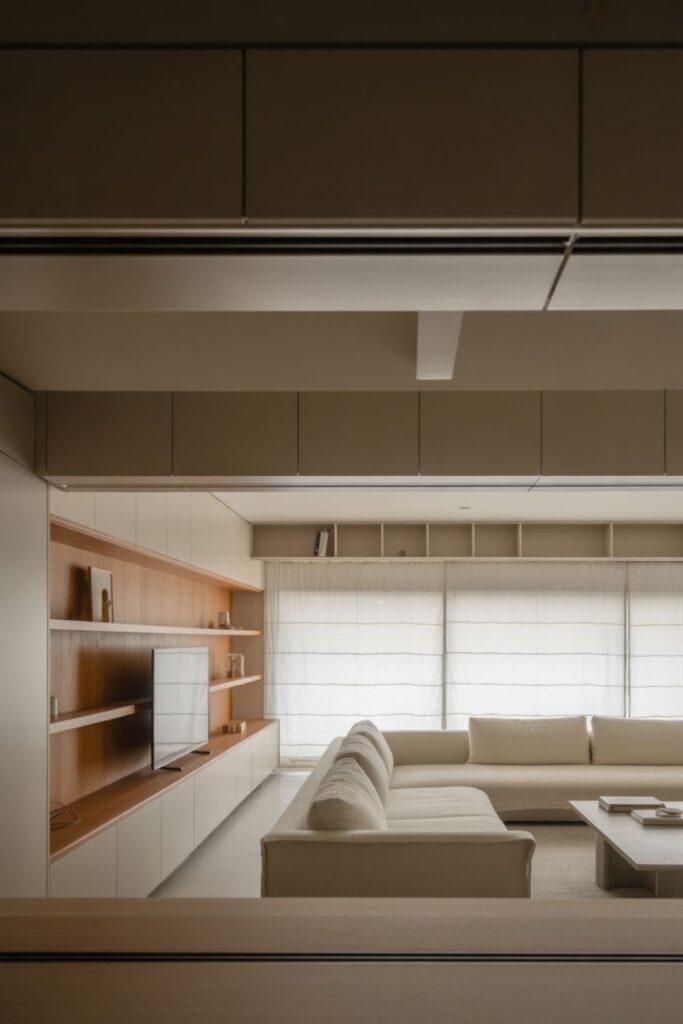
9. Use Built-In Storage
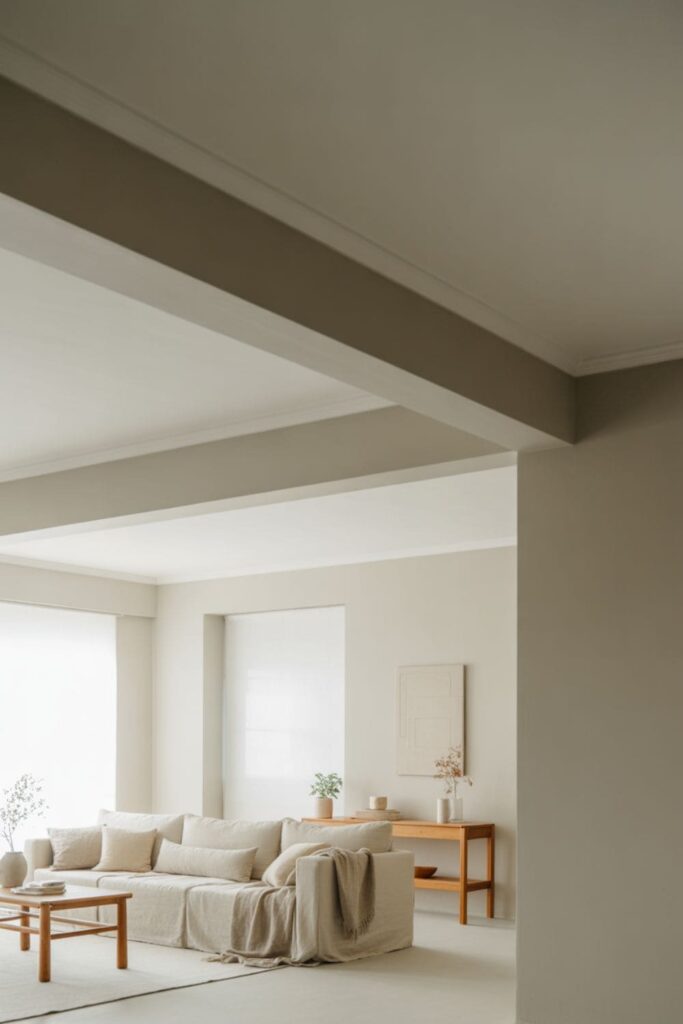
Bulky storage units eat space.
Especially vertical space.
Built-ins are cleaner.
Sleeker.
Wall-to-wall, low-height storage works well.
So do floating shelves.
Keep storage streamlined.
No heavy trims or crowns.
The simpler the lines, the taller the room feels.
10. Avoid Heavy Ceiling Details
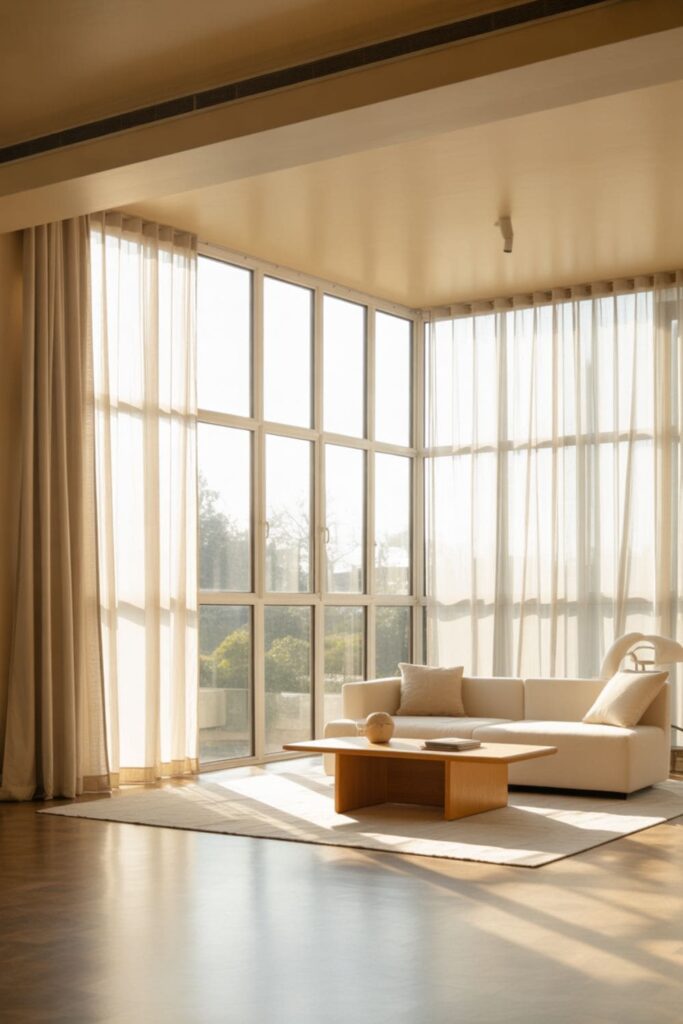
Ceiling details can be beautiful.
But not always practical.
Crown molding can lower the ceiling visually.
Especially if it’s thick.
If you want molding, keep it minimal.
Thin.
Simple.
Avoid coffered or tray ceilings.
They shrink vertical space.
A flat, clean ceiling works best here.
11. Maximize Natural Light
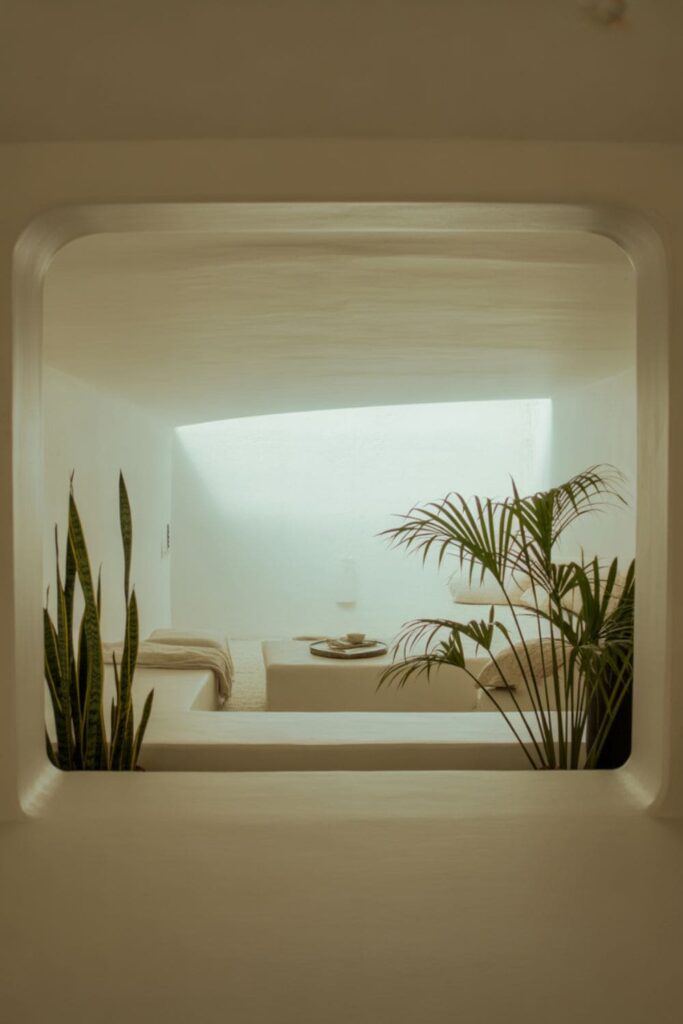
Natural light opens everything up.
It’s essential for low ceilings.
Keep windows unobstructed.
No heavy blinds.
Use sheer curtains or light shades.
Let the light in.
If privacy is a concern, use frosted window films.
They maintain brightness.
A brighter room always feels taller.
12. Use Tall Plants Sparingly
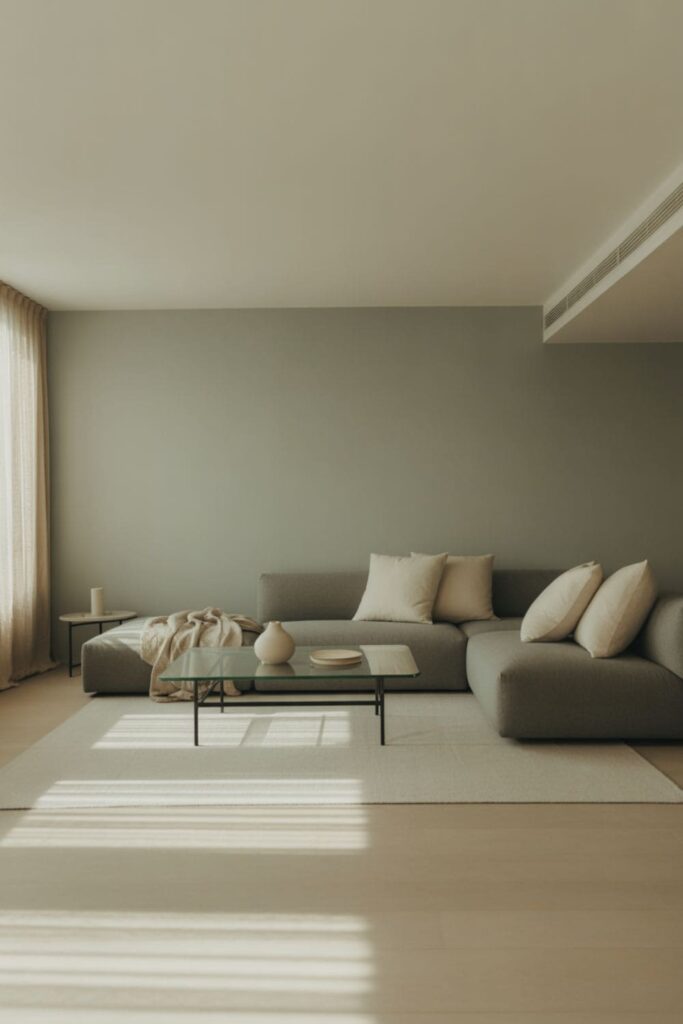
Plants add life.
But placement matters.
Tall, narrow plants can emphasize height.
Think snake plants or palms.
Place them in corners.
They stretch the room upward.
Avoid bushy plants that spread wide.
They crowd the space.
One or two plants is enough.
Don’t overdo it.
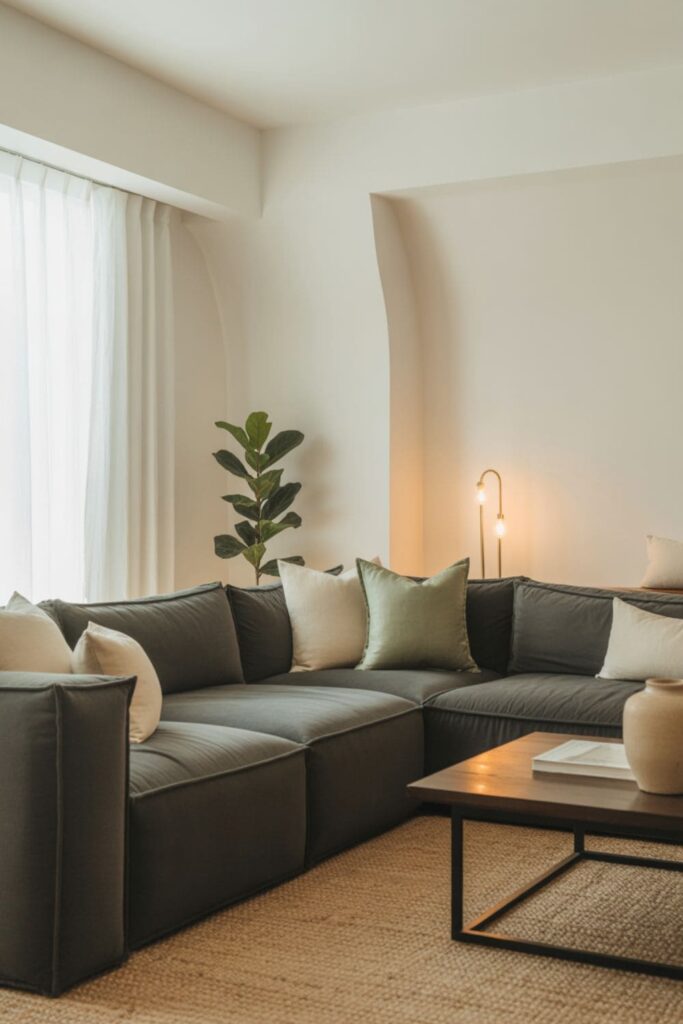
13. Keep the Color Palette Simple
Too many colors create chaos.
Chaos feels cramped.
Stick to a tight color palette.
Two or three main colors.
Monochromatic schemes work especially well.
Different shades of the same color.
This creates flow.
Flow creates space.
Bold accents are fine.
Just keep them controlled.
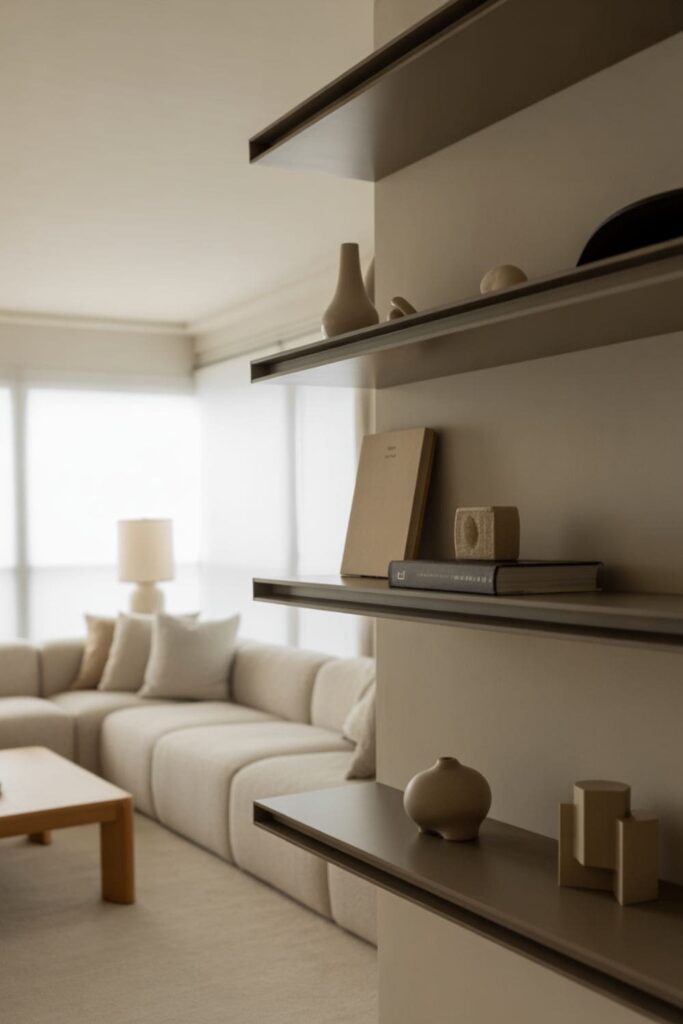
14. Choose Slim Shelving and Decor
Decor can overwhelm fast.
Especially in low-ceiling rooms.
Choose slim shelves.
Thin frames.
Minimal decor.
Avoid stacking objects high.
It clutters the vertical space.
Leave negative space.
Empty areas matter.
A room doesn’t need to be full to feel finished.
15. Create a Visual Focal Point
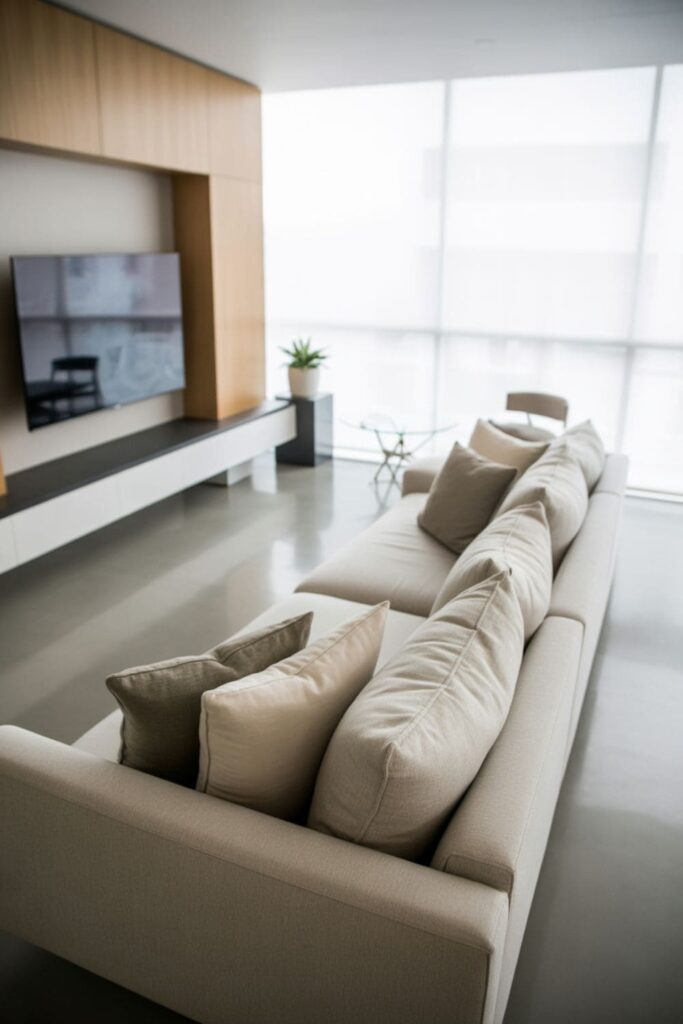
Every room needs focus.
Even small ones.
Choose one main focal point.
A feature wall.
A fireplace.
A statement sofa.
When the eye knows where to land, the room feels organized.
Less chaotic.
Avoid multiple competing features.
That shrinks the space.
One strong idea is enough.
16. Use Wall-Mounted Furniture
Wall-mounted pieces free the floor.
And that matters.
Floating TV units work well.
So do wall-mounted consoles.
The room feels lighter.
Less crowded.
Avoid furniture that sits flat and heavy on the ground.
Air underneath creates visual height.
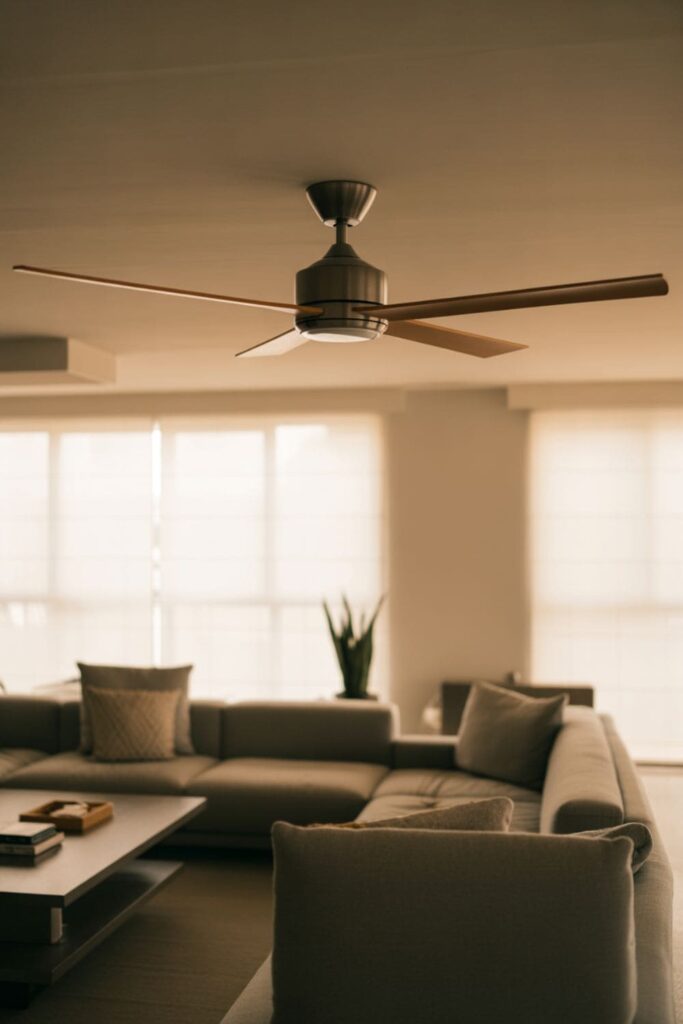
17. Keep Ceiling Fans Minimal
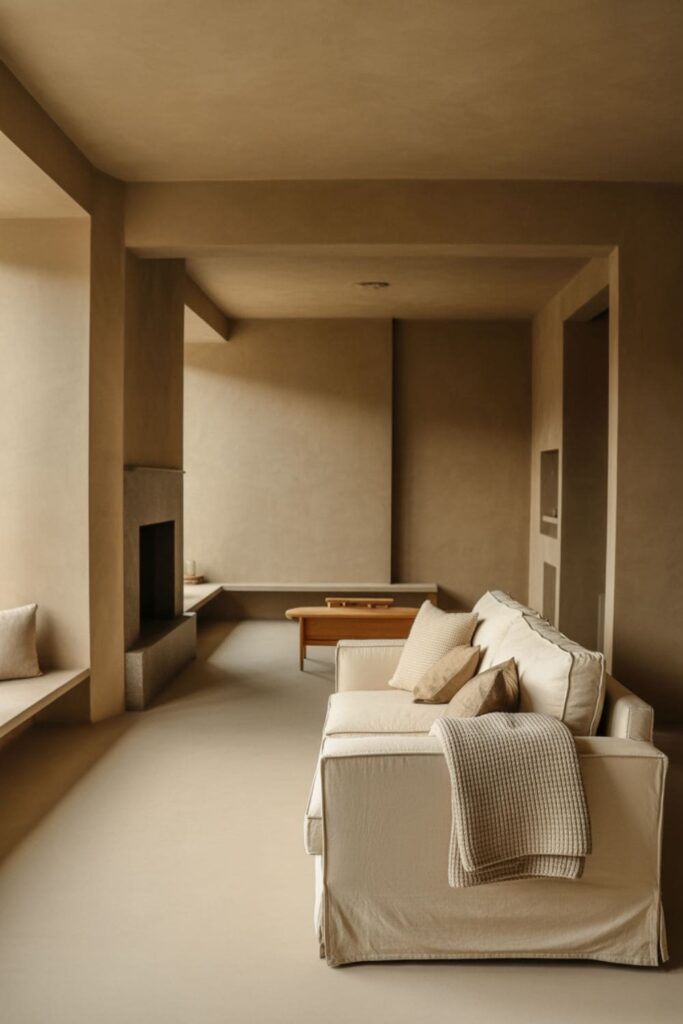
Ceiling fans can be tricky.
Especially in low rooms.
If you need one, choose a low-profile fan.
Flush-mounted.
Slim blades.
Avoid decorative or bulky fans.
They hang too low.
Sometimes, no fan is better than the wrong fan.
18. Choose Matte Finishes Over Gloss
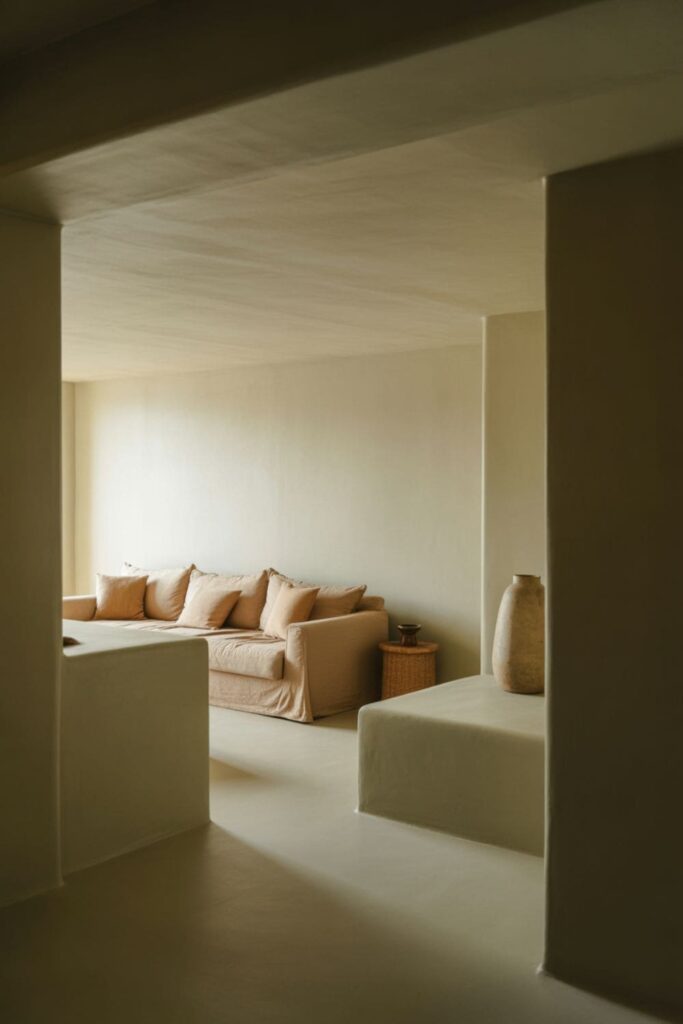
Gloss reflects light.
But it also reflects clutter.
Matte finishes feel calmer.
More natural.
Walls, furniture, and decor look softer this way.
The room feels less busy.
Busy rooms feel smaller.
Always.
19. Extend Wall Color Onto Trim
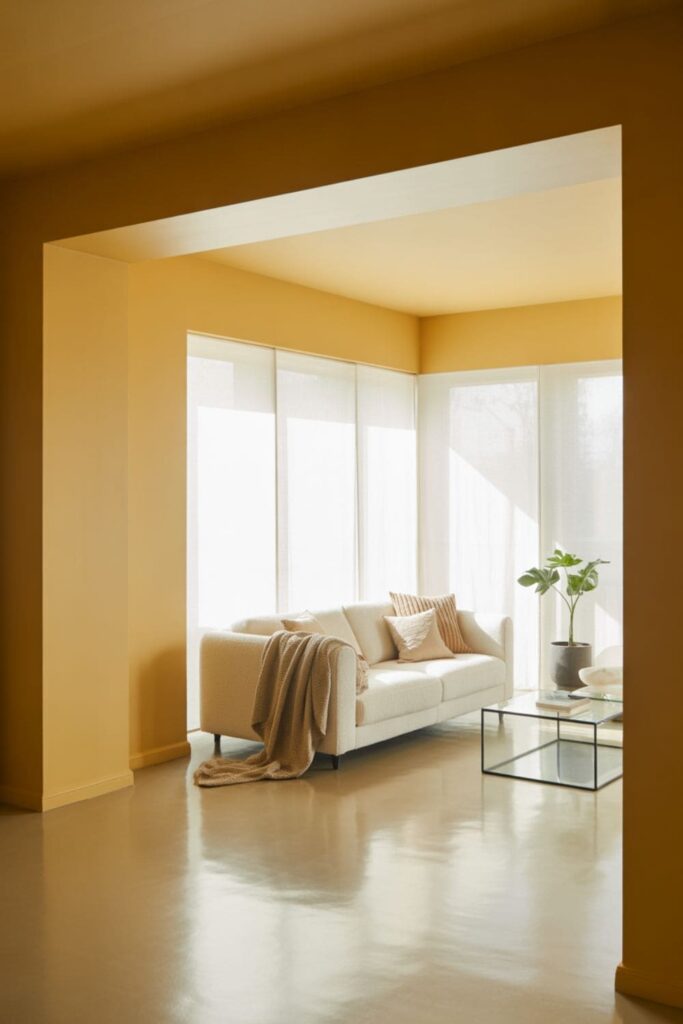
Contrast can cut space.
Visually.
Painting trim the same color as the walls creates flow.
No breaks.
No harsh lines.
Doors included.
This simple trick makes walls feel taller.
And smoother.
20. Use Long, Low Media Units
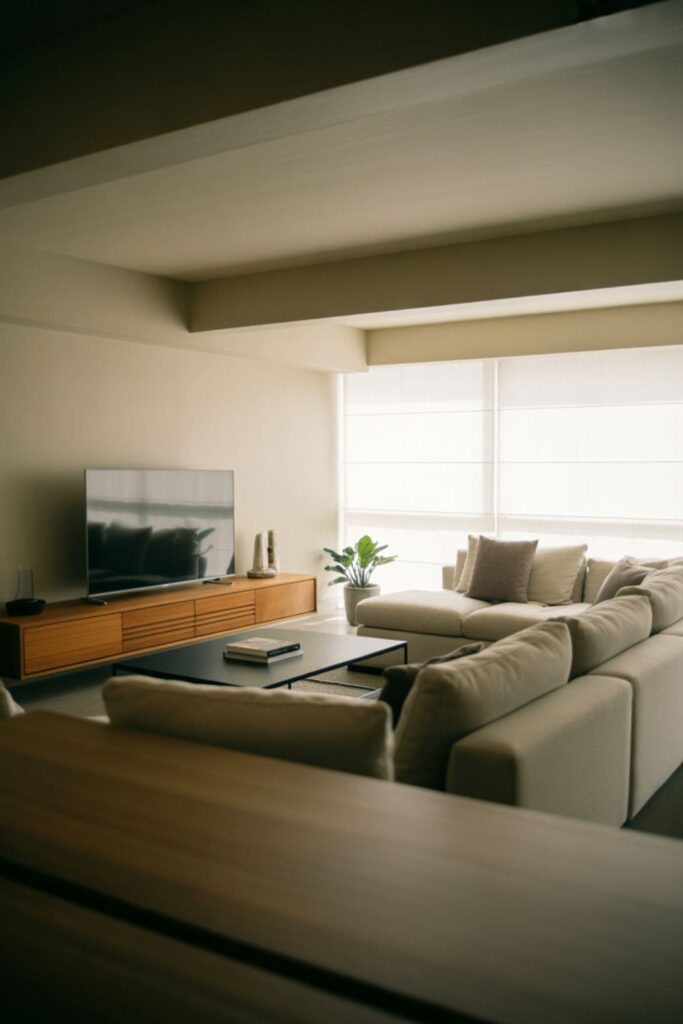
TV placement matters.
A lot.
Choose long, low media units.
Not tall cabinets.
Mount the TV slightly higher if needed.
But don’t push it too high.
Balance is key.
Always.
Related: 17+ Living Room Ideas With Large Windows
Conclusion
Low ceilings don’t mean low style.
They just require smarter decisions.
With light colors, low-profile furniture, and clean lines, a living room can feel open and intentional.
Even elegant.
The key is restraint.
And awareness.
Work with vertical space.
Let light flow.
Keep things simple.
When done right, a low-ceiling living room doesn’t feel limited.
It feels cozy.
Balanced.
And thoughtfully designed.
And that’s what great interiors are really about.

